Network route planning
Drain routes mapped against the site plan and building layout
Capital
A sewer network in Salhiya serves high commercial buildings and multi-storey shops near the commercial complex. Fixtures spread across dozens of bathrooms, kitchens and storage areas on different levels. We map every branch, calculate falls, excavate and bury pipes under asphalt and tiles. Final drawings show the position of every inspection point below ground.
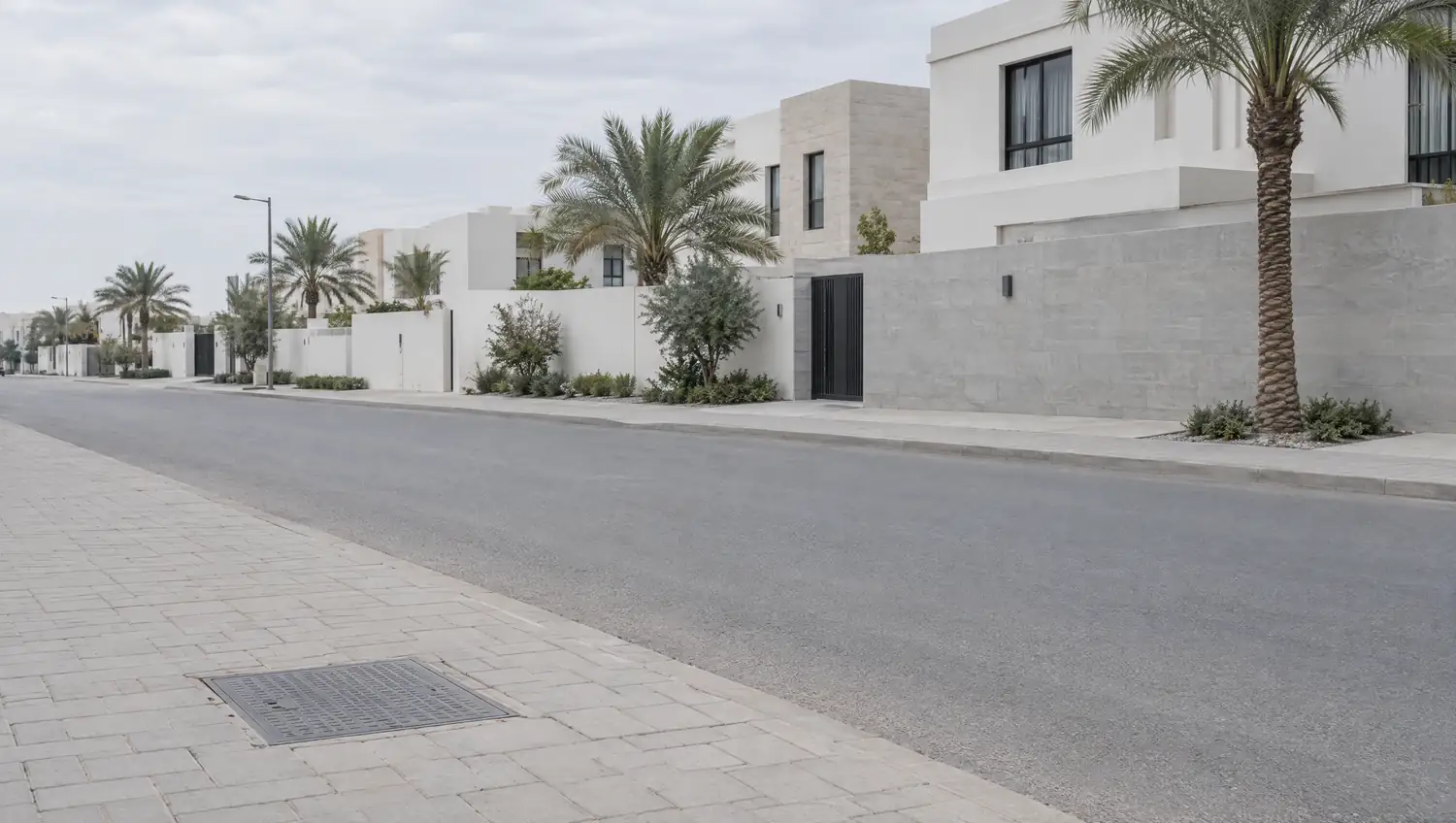
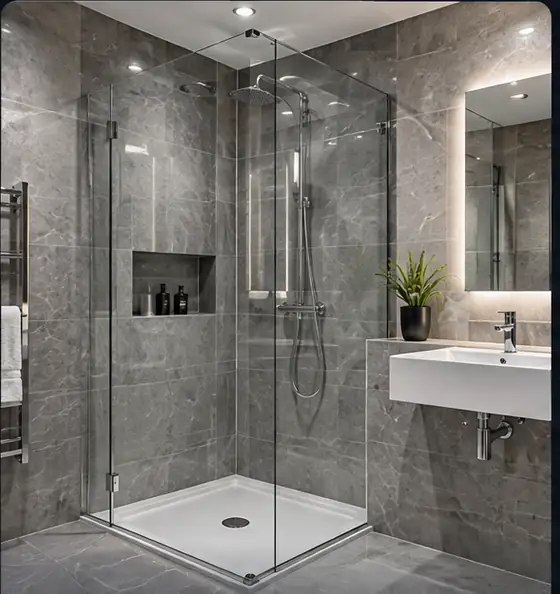
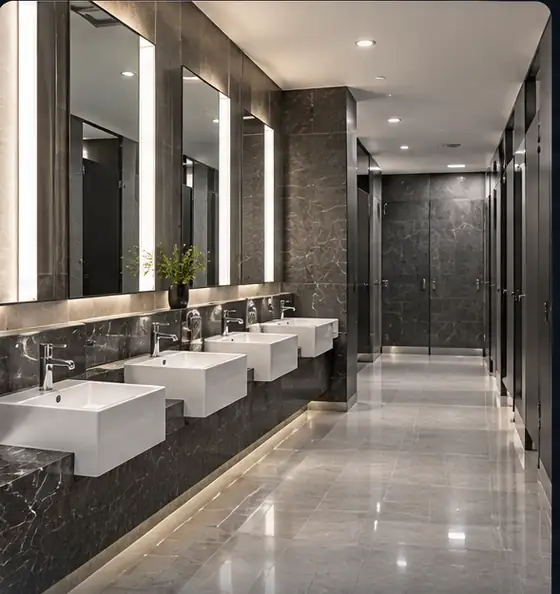
Salhiya is a dense commercial zone with a hotel tower, office blocks and connected shops, the streets fully paved meaning deep trenches under asphalt. Each commercial building has multiple waste points from hotel kitchens, public bathrooms and storage, often on different floors. We tie secondary pipes from each level into one main stack that falls steadily to the boundary chamber. A dense network needs closely spaced inspection chambers because blockages in commercial areas happen quickly and need regular cleaning access.
Salhiya sits near the Sheraton Hotel in the heart of the capital's shopping district, where commercial towers and retail shops cluster in tight space.
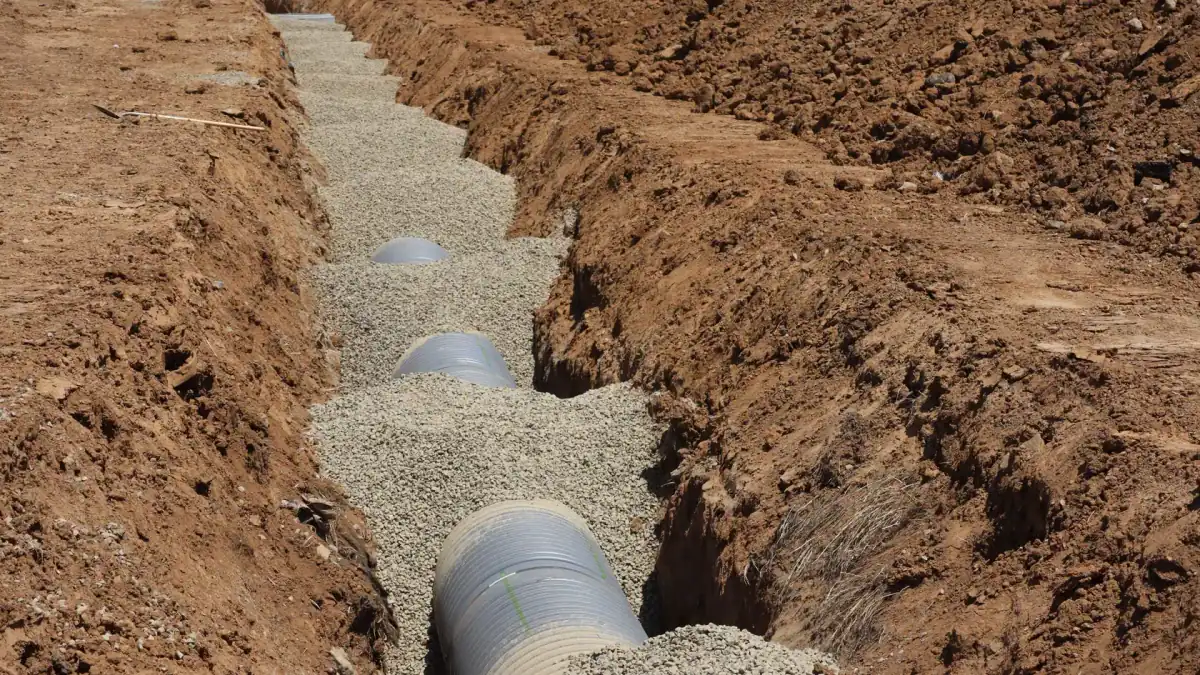
Pipes under asphalt must withstand heavy vehicle load, so we use thicker-walled pipes and place a gravel cushion above before repaving because traffic pressure can crack thin pipes.
Drain routes mapped against the site plan and building layout
Pipes set at calculated gradients on compacted sand bedding to prevent sagging
Chambers built at every change of direction for future maintenance access
Network pressure-tested before backfilling to confirm all joints are sealed
In-line filming reveals any deflection or cracked joint before trench closure
Drain networks for new construction and building extensions to the same standard
How we work

Tell us what is happening and where, and the right equipment is loaded before we arrive.
We film the line from inside and know the kind of blockage and its exact place. No guessing.
High pressure water, a machine or a drain snake, whichever the line actually needs.
The camera runs a second pass and you see the line clear with your own eyes before we leave.
Same method, same equipment. Only the size of the job changes.
Why us
Amana means trust. Someone else's home is not ours to be careless in.
Do not take our word for it. Look at the line yourself.
Breaking is the last resort, never the first step.
A blocked line does not wait for the morning.
Six governorates, 139 areas.
For buildings and complexes, servicing before the problem starts.
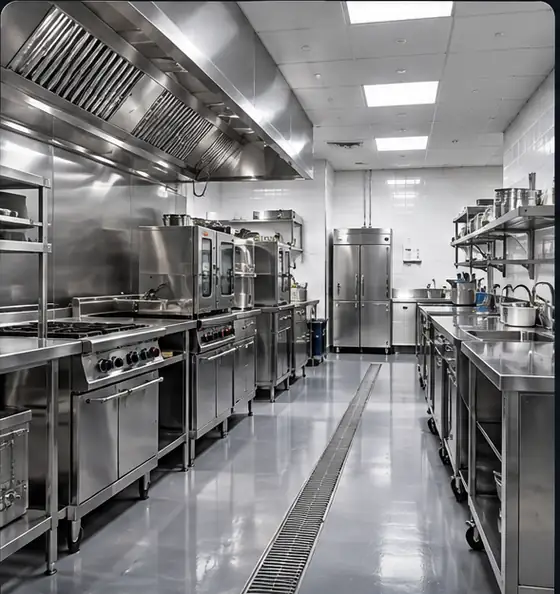
Restaurants, offices and complexes, not only homes.
Common questions
Need someone now? The emergency line is open any hour.
+965 9668 4964
We place a chamber every 30 to 40 metres on a straight run, and another at each direction change or pipe-size increase. Commercial areas need more chambers than residential zones because the load is higher and blockages more likely.
No, standard pipes can collapse under truck and digger weight. We use thick ceramic or plastic pipes, then place a 20 cm gravel layer above as a buffer before new asphalt is laid.