Network route planning
Drain routes mapped against the site plan and building layout
Capital
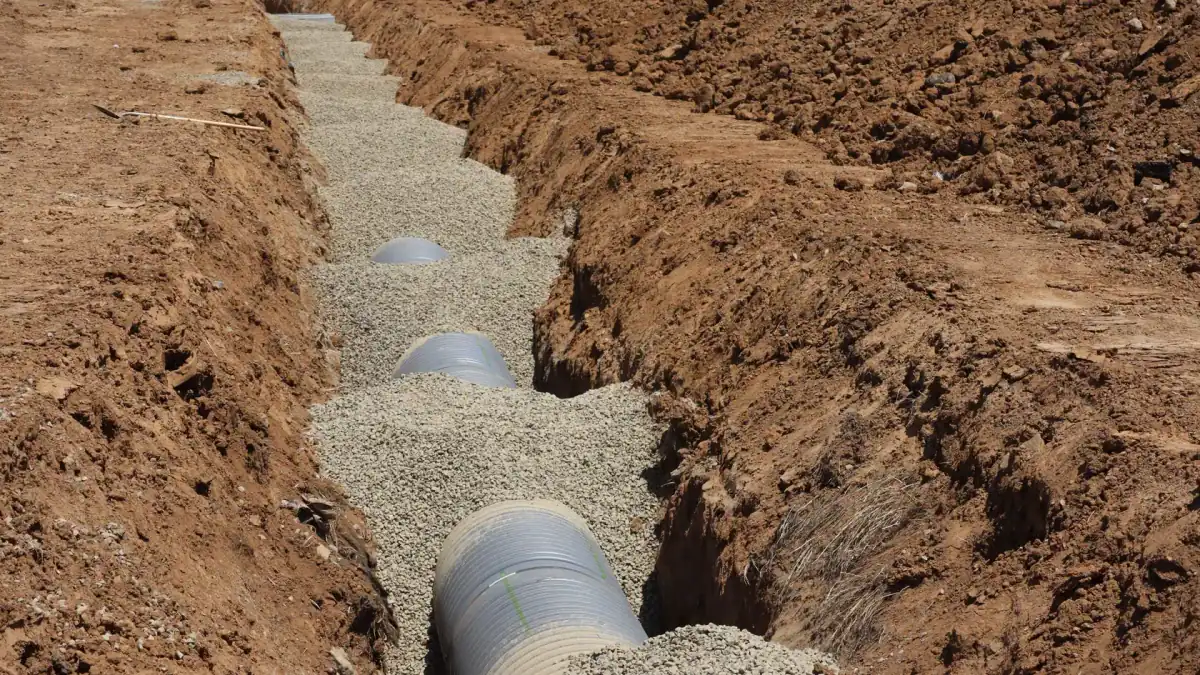
Installing a buried sewer network in Shamiya requires understanding sandy soil and shallow groundwater. We plan routes from each bathroom and kitchen to an intermediate inspection chamber then to the boundary chamber. Pipes are wrapped with a protective layer before backfill to prevent moisture and corrosion.
Residential houses around Shamiya's Fifth Ring junction were built on light sandy ground, which means trenches collapse easily and pipes need extra support underneath. We place a 10-centimetre sand bed under the pipe and compact it well, then backfill around the pipe with graded sand free of sharp stones. Slope is checked carefully at each point because sand may shift slightly during compaction.
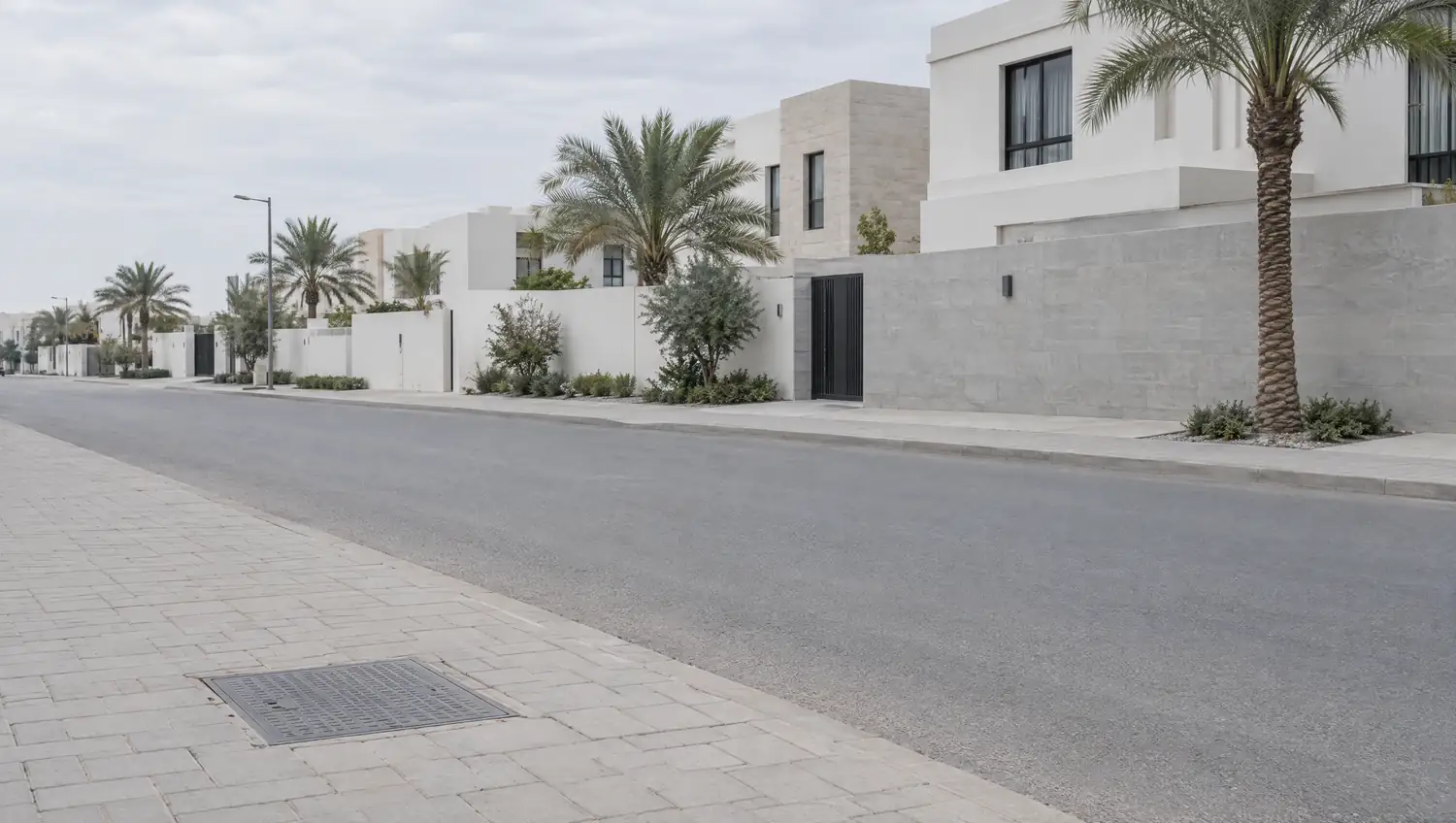
Shamiya sits in Kuwait governorate near Fifth Ring Road, a residential area on sandy soil with medium-sized family homes.
Groundwater in Shamiya is relatively high, so pipes are tested under hydrostatic pressure before final backfill.
Drain routes mapped against the site plan and building layout
Pipes set at calculated gradients on compacted sand bedding to prevent sagging
Chambers built at every change of direction for future maintenance access
Network pressure-tested before backfilling to confirm all joints are sealed
In-line filming reveals any deflection or cracked joint before trench closure
Drain networks for new construction and building extensions to the same standard
How we work

Tell us what is happening and where, and the right equipment is loaded before we arrive.
We film the line from inside and know the kind of blockage and its exact place. No guessing.
High pressure water, a machine or a drain snake, whichever the line actually needs.

The camera runs a second pass and you see the line clear with your own eyes before we leave.
Same method, same equipment. Only the size of the job changes.
Why us
Amana means trust. Someone else's home is not ours to be careless in.
Do not take our word for it. Look at the line yourself.
Breaking is the last resort, never the first step.
A blocked line does not wait for the morning.
Six governorates, 139 areas.
For buildings and complexes, servicing before the problem starts.
Restaurants, offices and complexes, not only homes.
Common questions
Need someone now? The emergency line is open any hour.
+965 9668 4964
Yes, but we need to pump groundwater with dewatering pumps during excavation to see the trench bottom. We use strong plastic pipes and sealed inspection chambers to prevent ground water seeping into the network.
Temporary timber and steel struts support trench walls in sandy ground. If collapse occurs, we re-excavate more carefully and increase wall bracing before laying pipes.