Network route planning
Drain routes mapped against the site plan and building layout
Jahra
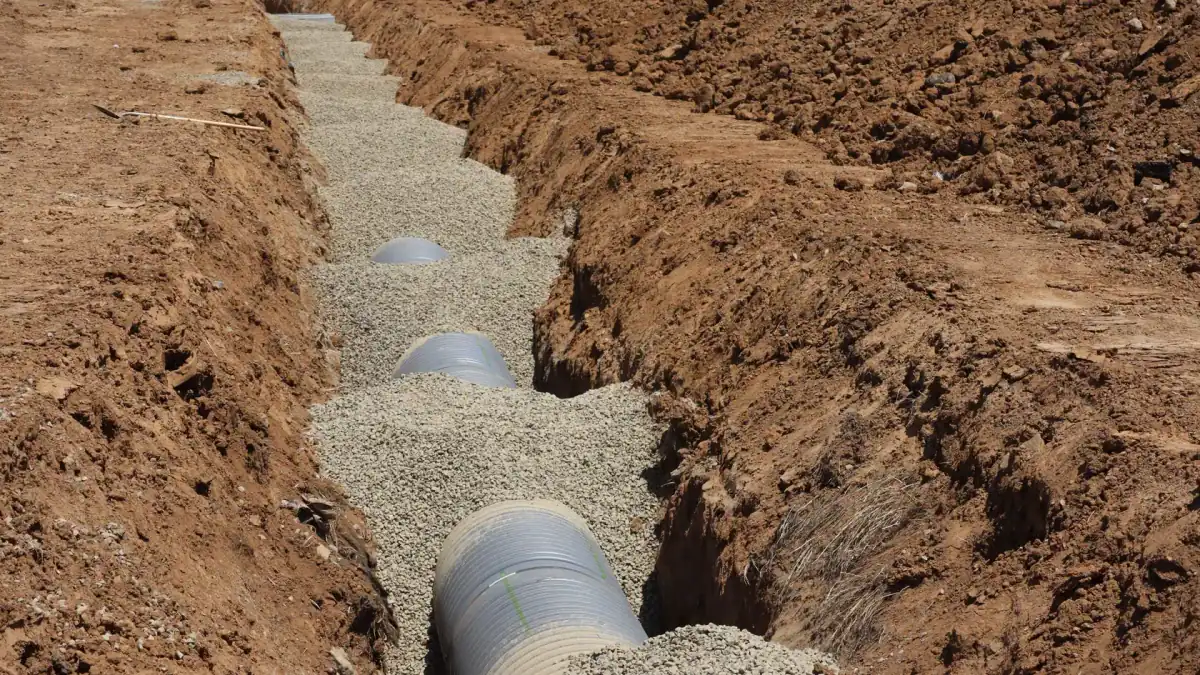
Sewer network installation in Sulaibiya starts by plotting pipe runs from every fixture to the boundary chamber. We set burial depth according to sand levels and avoid rocks and coarse gravel. We test the fall of each section with a level tool and inspect every joint visually before backfilling.
Most Sulaibiya houses sit on large plots, and the distance from bathrooms and kitchens to the boundary chamber can be very long, meaning sewer runs under sand for stretches over thirty metres. We dig a trench with steady fall and no sudden drops, using rigid plastic pipes that handle soil sideways pressure. We check the gradient every four metres and record readings before backfilling the trench with recycled sand and coarse gravel.
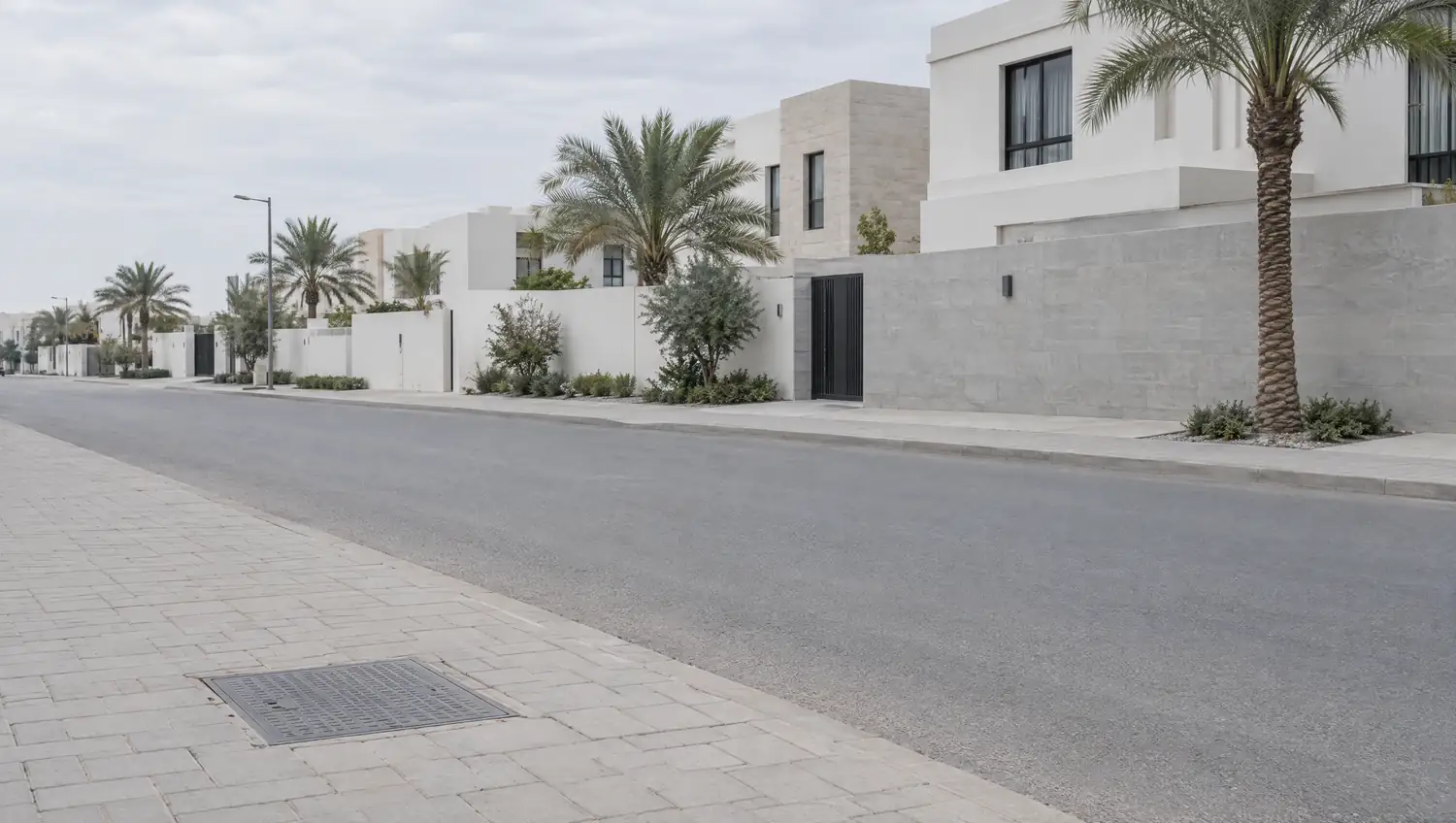
Sulaibiya sits in Jahra governorate, a scattered residential area on desert fringe where soil is sandy and plots are widely spaced.
We test the sewer network with running water after backfilling to ensure no pipe blockage or joint leakage under pressure.
Drain routes mapped against the site plan and building layout
Pipes set at calculated gradients on compacted sand bedding to prevent sagging
Chambers built at every change of direction for future maintenance access
Network pressure-tested before backfilling to confirm all joints are sealed
In-line filming reveals any deflection or cracked joint before trench closure
Drain networks for new construction and building extensions to the same standard
How we work

Tell us what is happening and where, and the right equipment is loaded before we arrive.
We film the line from inside and know the kind of blockage and its exact place. No guessing.
High pressure water, a machine or a drain snake, whichever the line actually needs.
The camera runs a second pass and you see the line clear with your own eyes before we leave.
Same method, same equipment. Only the size of the job changes.
Why us
Amana means trust. Someone else's home is not ours to be careless in.
Do not take our word for it. Look at the line yourself.
Breaking is the last resort, never the first step.
A blocked line does not wait for the morning.
Six governorates, 139 areas.
For buildings and complexes, servicing before the problem starts.
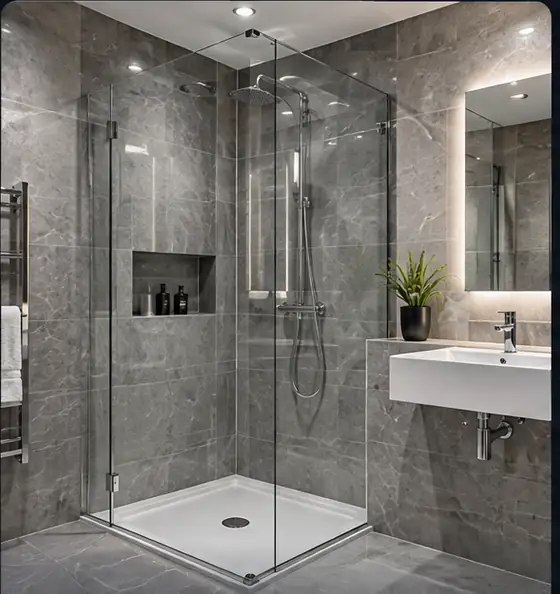
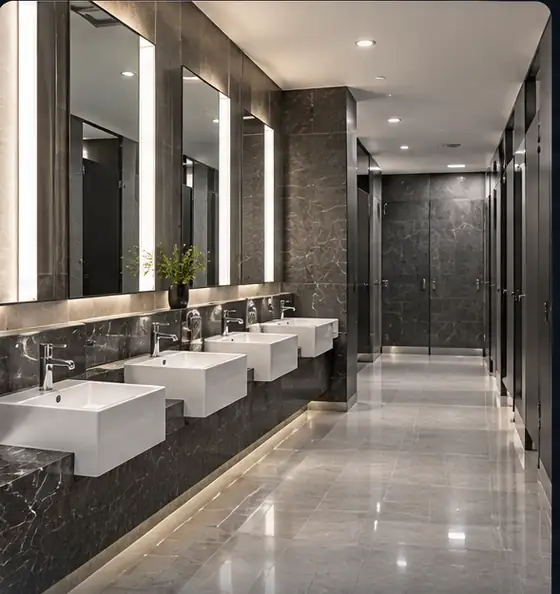
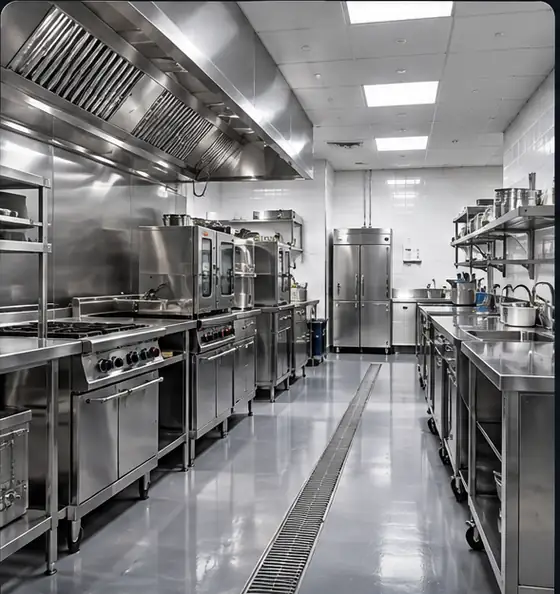
Restaurants, offices and complexes, not only homes.
Common questions
Need someone now? The emergency line is open any hour.
+965 9668 4964
We target at least 90 cm below natural ground level, which protects pipes from shifting due to wind and drifting sand. Where vehicles cross we increase depth to 120 cm.
We dig at a gentle slope rather than vertical walls, and may use temporary wooden boards if the trench runs very deep. We work fast and support pipes with compacted recycled sand before final backfill.