Network route planning
Drain routes mapped against the site plan and building layout
Hawalli
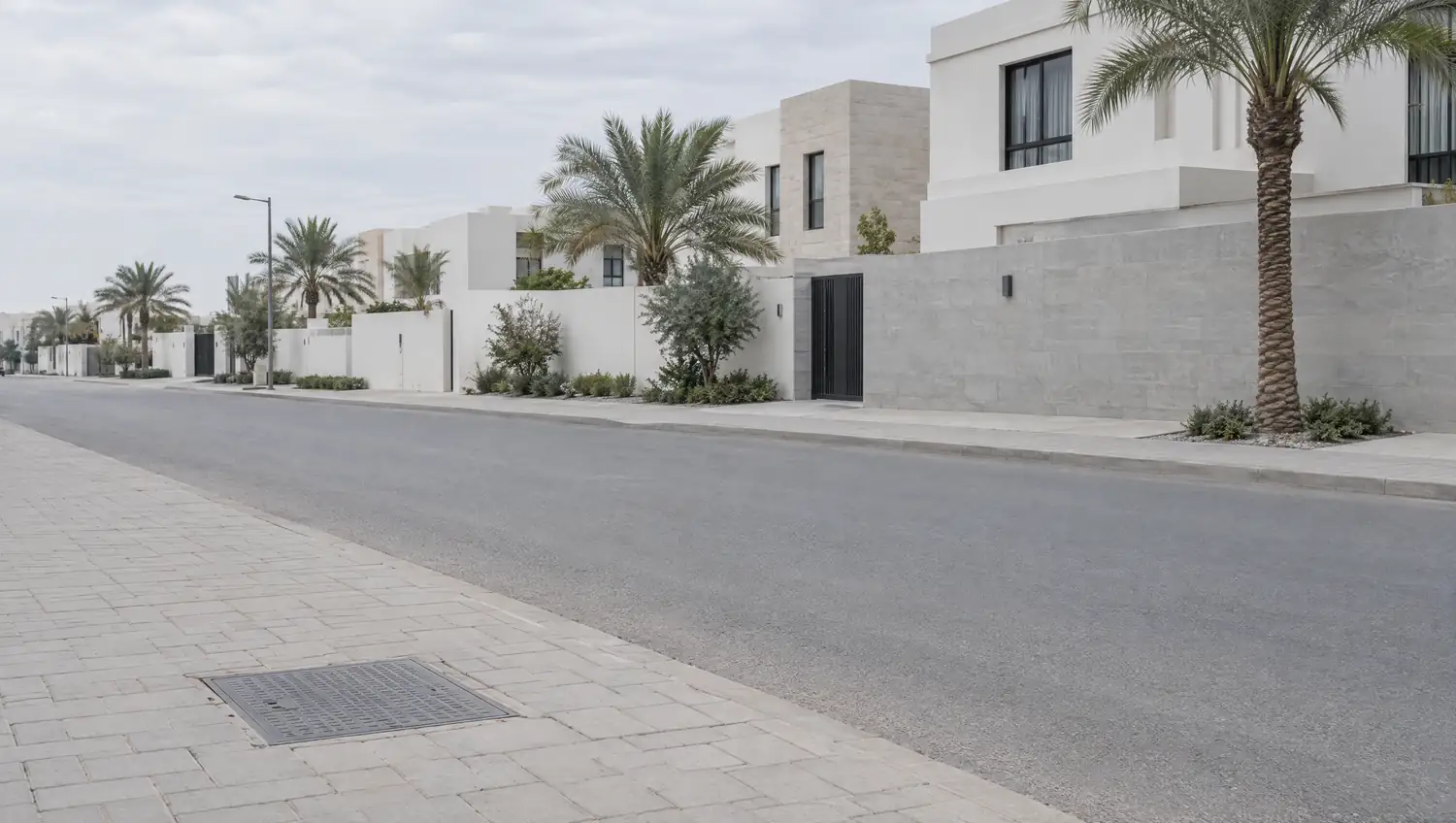
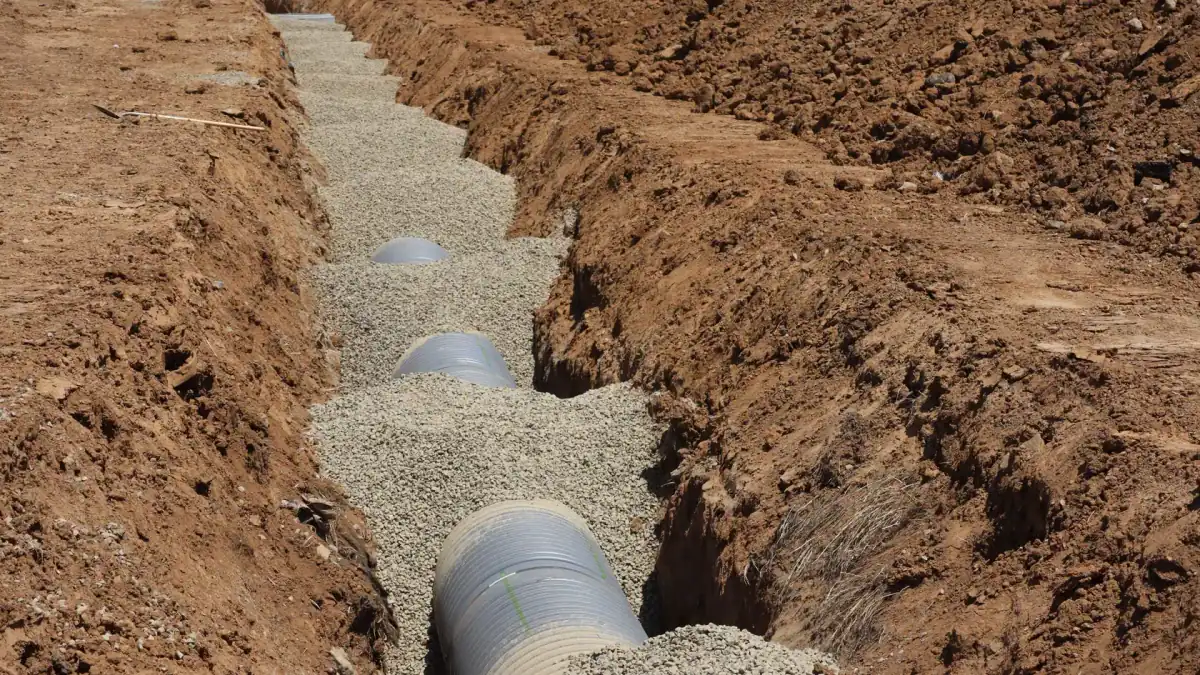
Burying a sewer network in Salwa starts with mapping pipe routes from every fixture to the boundary chamber. We excavate the runs at steady fall, backfill soil carefully and test each section by flushing with water to verify integrity.
Salwa homes near Salwa Co-op are mostly medium-sized villas with multiple bathrooms and small gardens. The sewer network runs from bathroom, kitchen and yard outlets then merges into main lines beneath the garden. We inspect the fall of each section and confirm no air pockets form in the pipes, because trapped air can cause blockages later.
Salwa is in Hawalli governorate, a villa district of families where the distances between bathrooms and kitchens require long underground runs.
Before handover, the line is filled with water from the top and left to stand for an hour to confirm no leakage or soil settlement.
Drain routes mapped against the site plan and building layout
Pipes set at calculated gradients on compacted sand bedding to prevent sagging
Chambers built at every change of direction for future maintenance access
Network pressure-tested before backfilling to confirm all joints are sealed
In-line filming reveals any deflection or cracked joint before trench closure
Drain networks for new construction and building extensions to the same standard
How we work

Tell us what is happening and where, and the right equipment is loaded before we arrive.
We film the line from inside and know the kind of blockage and its exact place. No guessing.
High pressure water, a machine or a drain snake, whichever the line actually needs.

The camera runs a second pass and you see the line clear with your own eyes before we leave.
Same method, same equipment. Only the size of the job changes.
Why us
Amana means trust. Someone else's home is not ours to be careless in.
Do not take our word for it. Look at the line yourself.
Breaking is the last resort, never the first step.
A blocked line does not wait for the morning.
Six governorates, 139 areas.
For buildings and complexes, servicing before the problem starts.
Restaurants, offices and complexes, not only homes.
Common questions
Need someone now? The emergency line is open any hour.
+965 9668 4964
It depends on pipe depth and garden size. We usually dig one-and-a-half to two metres deep to avoid soil movement from rain or watering.
Yes but not large trees with deep roots. Small shrubs and herbaceous plants are safe, but large tree roots can penetrate pipes and cause blockages.