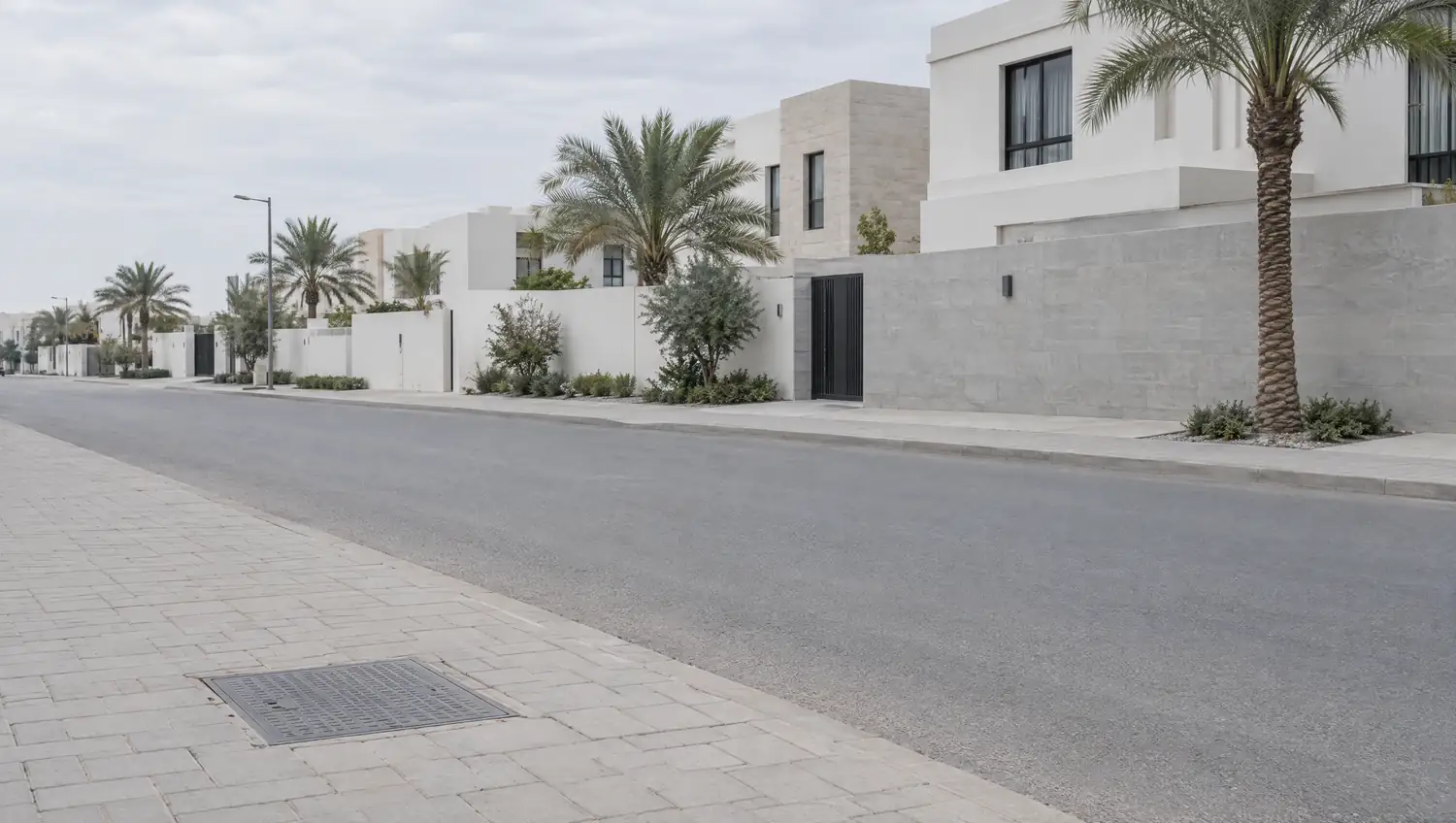
Site level survey
Ground elevation readings confirm the natural direction water will travel
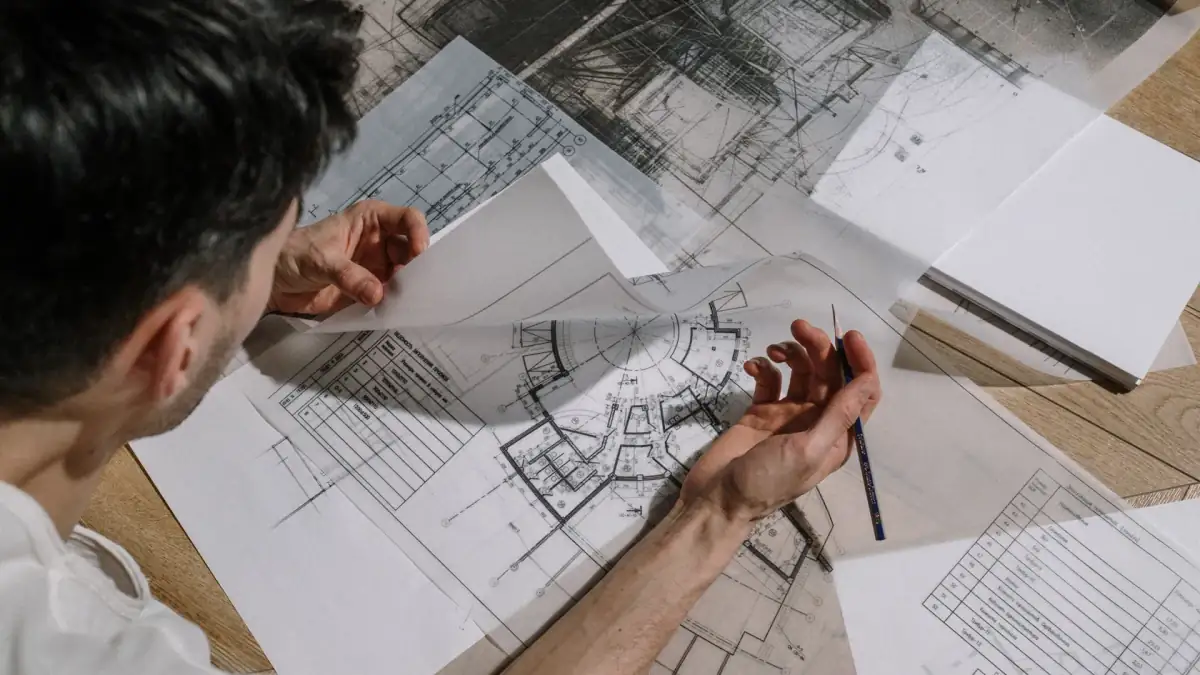
Jahra
Storm drain network design in Jahra Industrial focuses on factory roofs spanning vast areas with wide spaces between buildings. We identify multiple collection points and link them with main lines in large diameters that carry water to a retention tank or municipal drain. Drawings show every system section with industrial precision.
Jahra Industrial factories are spread across vast terrain with roofs of corrugated metal or concrete at varying heights. Spaces between factories are sandy or bare ground that slopes naturally toward wadis. We place collection points at the base of each factory and major street, then link them by drawing a pipe network that follows natural slopes. We choose large-diameter pipes from 150 to 250 mm to handle heavy rainfall surge.
Jahra Industrial Area in Jahra governorate spans vast terrain with dozens of factories and workshops.
We test each network section by pumping water for a full hour to verify pipes can discharge water quickly without blockage.
Ground elevation readings confirm the natural direction water will travel
Expected flow volume determines the correct pipe diameter for each run
Gullies are positioned so no low point is left without an outlet
Chambers placed at every direction change to allow future maintenance
Adequate slope prevents sand settlement and keeps flow gravity-driven
Final discharge point set away from foundations, fencing and neighbouring plots
How we work

Tell us what is happening and where, and the right equipment is loaded before we arrive.
We film the line from inside and know the kind of blockage and its exact place. No guessing.
High pressure water, a machine or a drain snake, whichever the line actually needs.
The camera runs a second pass and you see the line clear with your own eyes before we leave.
Same method, same equipment. Only the size of the job changes.
Why us
Amana means trust. Someone else's home is not ours to be careless in.
Do not take our word for it. Look at the line yourself.
Breaking is the last resort, never the first step.
A blocked line does not wait for the morning.
Six governorates, 139 areas.
For buildings and complexes, servicing before the problem starts.
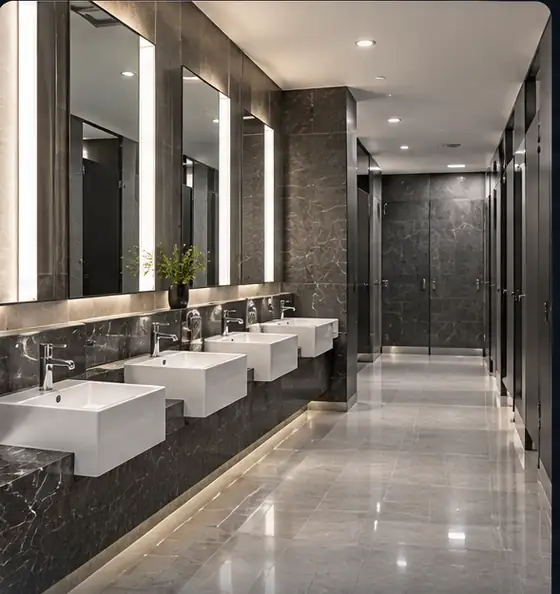
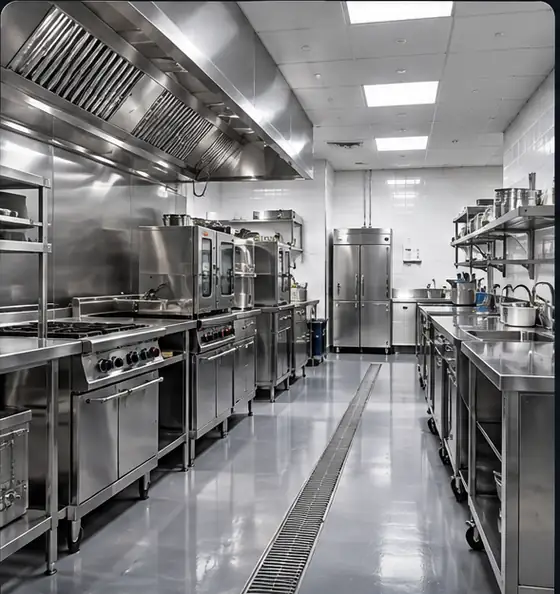
Restaurants, offices and complexes, not only homes.
Common questions
Need someone now? The emergency line is open any hour.
+965 9668 4964
We size collection points by factory count and each roof area. Usually one point serves two or three factories, at least one per 200 square metres. Each point connects to the next via a single main line.
Yes, if the wadi is near and natural slope permits it. We inspect wadi location and course first, then design a final discharge line ending in a raised opening that sand won't cover. Municipal approval is required before work starts.