Blocked outlet clearing
Removing sand and silt blocking storm-water outlet pipes
Jahra
Storm-water drainage in South Jahra starts by inspecting your roof and ground level to map where water collects. We clear existing gutters and pipes, then extend new lines toward floor traps or the street with proper fall. Every run is tested before we leave.
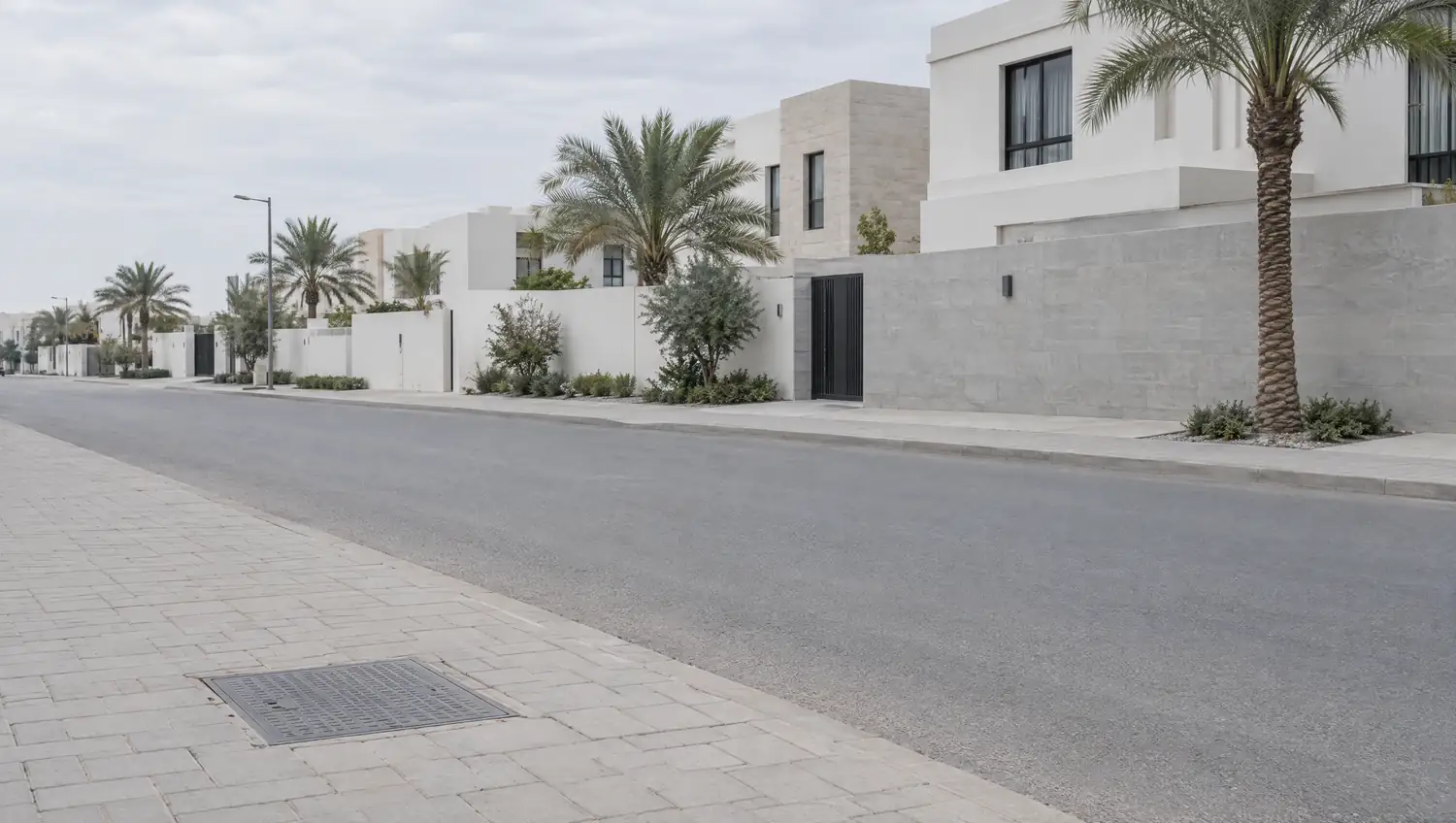
Most South Jahra villas have flat roofs and front gardens, so rain slides from the roof to gutters and down vertical pipes. Many roofs currently drain straight to the ground without any organized gutter, causing water to pool around the foundation and walls. We fit metal or plastic gutters, run downpipes along the villa wall and connect them to a floor trap well away from the building.
South Jahra is a residential suburb in Jahra governorate where detached villas are the standard home type and individual storm drainage is the norm.
We clear villa gutters twice yearly because dust and leaf matter block pipes quickly.
Removing sand and silt blocking storm-water outlet pipes
Water jet cuts through compacted sand and dried silt inside the line
Internal filming before and after so the clear result is confirmed
New network laid to correct falls for the property footprint
Emptying and cleaning collection sumps and linked floor gullies
Pre-season visits to keep storm lines clear before rain arrives
How we work

Tell us what is happening and where, and the right equipment is loaded before we arrive.

We film the line from inside and know the kind of blockage and its exact place. No guessing.
High pressure water, a machine or a drain snake, whichever the line actually needs.

The camera runs a second pass and you see the line clear with your own eyes before we leave.
Same method, same equipment. Only the size of the job changes.

Why us
Amana means trust. Someone else's home is not ours to be careless in.
Do not take our word for it. Look at the line yourself.
Breaking is the last resort, never the first step.
A blocked line does not wait for the morning.
Six governorates, 139 areas.
For buildings and complexes, servicing before the problem starts.
Restaurants, offices and complexes, not only homes.
Common questions
Need someone now? The emergency line is open any hour.
+965 9668 4964
Rainwater must flow from the roof through gutters and vertical pipes to a floor trap at least one and a half metres from the foundation. We test the pipe fall by running water through and confirming steady flow without backups.
A small roof might drain through one trap dug one and a quarter metres deep. Large roofs need two separate traps on opposite sides of the house to split the volume and allow faster drainage.