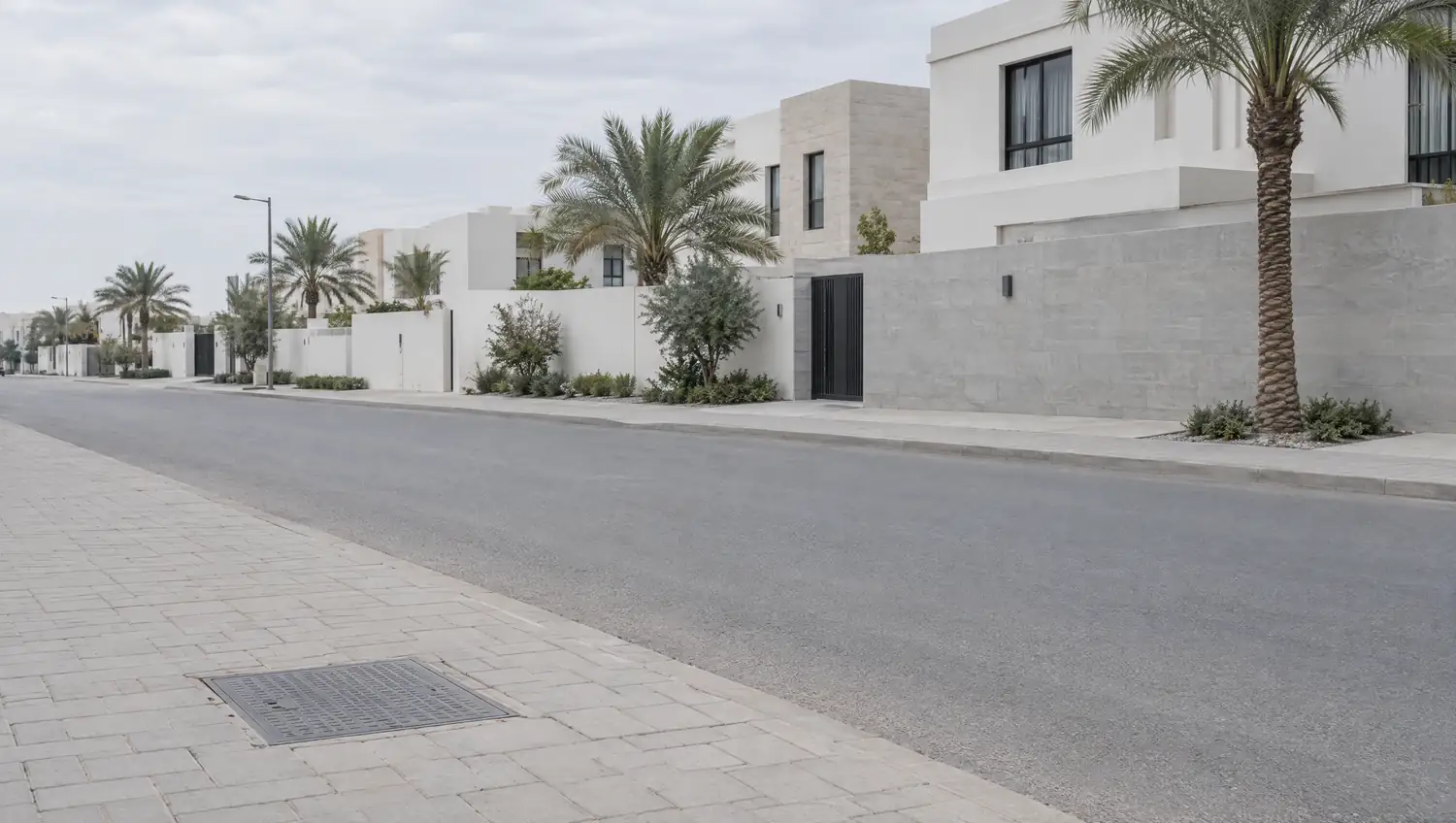
Roof tank installation
Polyethylene tank set on roof with supply, overflow and pump lines connected
Hawalli
Tank installation in Siddiq, a densely populated area, requires precise sizing and roof strength verification. We hoist the tank with a safety winch, set it on an isolated concrete base and connect a strong pump meeting high demand. All piping is pressure-tested twice before handover.
Many Siddiq houses near Siddiq Co-op are apartment towers or joined villas needing tanks from three to five thousand litres. Roofs here are often cramped and the run from street to pump room is long, so we use larger-diameter pipe to cut pressure loss. We scan the concrete slab with a thickness gauge before hoisting and set the tank on heavy rubber pads that spread the load across the whole roof without concentrating stress.
Siddiq is in Hawalli governorate, a densely built residential district of villas and apartment towers.
The tank and pump are tested together under full load for half an hour before handover because water demand in this district is very high.
Polyethylene tank set on roof with supply, overflow and pump lines connected
Watertight underground tank built with access hatches and rising main connected
Mains supply connected to tank with float valve and isolation fitted
Overflow routed away from the building at correct fall to prevent backflow
Transfer or pressure pump connected to tank and tested under load
Full network pressure test after installation confirms every joint holds
How we work

Tell us what is happening and where, and the right equipment is loaded before we arrive.
We film the line from inside and know the kind of blockage and its exact place. No guessing.
High pressure water, a machine or a drain snake, whichever the line actually needs.

The camera runs a second pass and you see the line clear with your own eyes before we leave.
Same method, same equipment. Only the size of the job changes.
Why us
Amana means trust. Someone else's home is not ours to be careless in.
Do not take our word for it. Look at the line yourself.
Breaking is the last resort, never the first step.
A blocked line does not wait for the morning.
Six governorates, 139 areas.
For buildings and complexes, servicing before the problem starts.
Restaurants, offices and complexes, not only homes.
Common questions
Need someone now? The emergency line is open any hour.
+965 9668 4964
The roof must be scanned first with a concrete thickness gauge. If it is less than twenty centimetres we suggest a smaller tank or spreading the load across two columns instead of a single point.
A submersible pump sits inside the tank and draws water directly from the bottom, so it avoids air entrapment. A surface pump on the roof needs a longer suction line and may lose prime if power cuts suddenly.