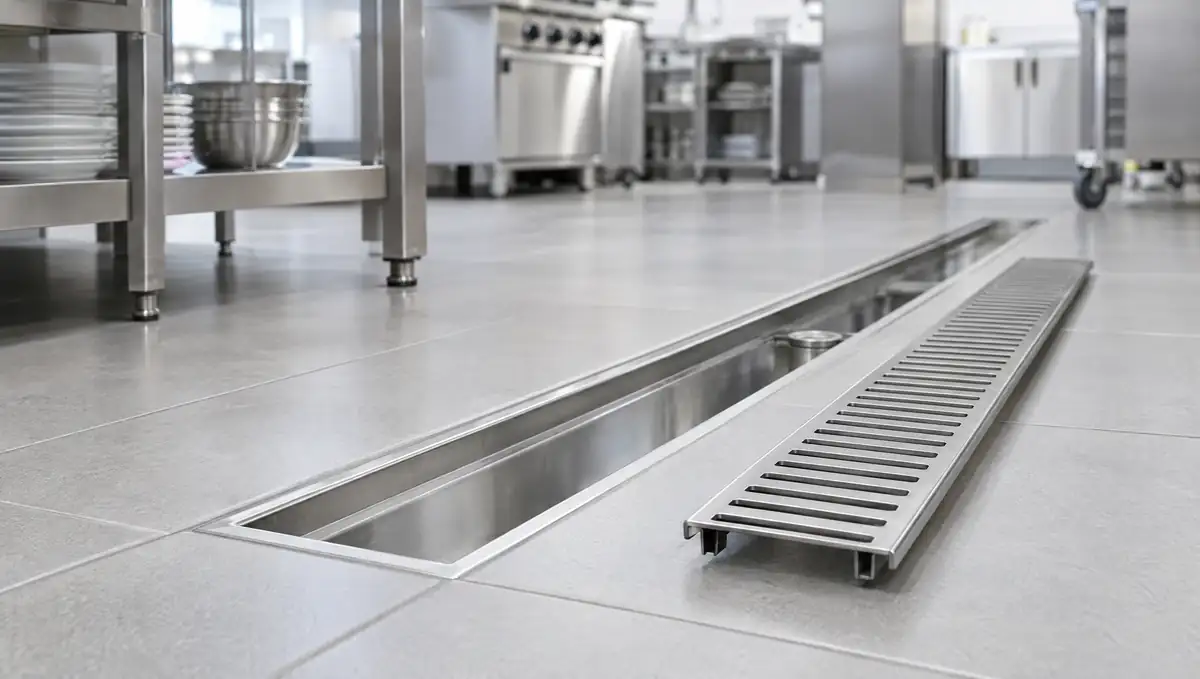
A commercial kitchen puts a different kind of load on its drainage than a home ever does, and treating it the same way, waiting for a blockage and then clearing it, is what leads to smells, slow drains during service, and the occasional total backup at the worst possible time. Understanding what a grease trap actually does, and what a maintenance routine looks like when it works, changes that, and it usually costs far less attention than the emergency it prevents.
Why kitchen drainage blocks differently
A home kitchen sends the occasional plate of grease down the sink. A restaurant kitchen sends it constantly, across every wash station, every fryer drain down, and every pot sink, for as many hours a day as the kitchen operates. Fat, oil, and grease are liquid when hot and solid once they cool below a certain point, and a drain line running from a hot wash station to a cooler section of pipe is exactly where that change happens, which is why grease tends to build up at bends and where pipe diameter or slope changes rather than evenly along the line.
Food solids, starch, and cleaning chemicals add to the load in a way a home kitchen's occasional dinner never approaches, and the sheer volume passing through a busy service means a kitchen line has far less margin before a partial restriction turns into a full stoppage. This is part of why the causes behind a drain that starts smelling of sewage show up faster and more often in a commercial kitchen than in a house, and why a kitchen cannot rely on the same wait and see approach a homeowner might get away with.
What a grease trap does
A grease trap sits between the kitchen drains and the main sewer line, and it works on a simple principle, wastewater slows down as it passes through the trap, giving fat and oil time to rise and float on top while heavier solids settle to the bottom, and only the relatively clean water in the middle layer continues on to the sewer line.
It does not remove grease permanently, it holds it in one place instead of letting it travel further down the line, which is the entire point, a trap that is emptied on schedule keeps the grease out of the pipe run where it would otherwise be far harder to reach and clear. The size and position of the trap, whether it sits under a sink or outside as a larger interceptor, changes how often it needs attention but not the underlying job it is doing.
What goes wrong without a schedule
A trap that is never emptied eventually fills to the point where it stops doing its job, the layer of trapped grease grows until there is no longer room for wastewater to slow down and separate properly, and grease begins passing through into the line it was meant to protect. From there the same build up described in kitchen line blockages starts forming downstream, except it now started from a point that was supposed to prevent it.
The smell is often the first thing noticed, usually before the actual slow drain, because a fully loaded trap gives off a strong odor that reaches the kitchen floor well before service is visibly affected. Left long enough, the outcome is the same total backup a home experiences from a build up, except during service, in a kitchen, with health and cleanliness stakes that a home backup does not carry.
What a maintenance routine looks like
The core of it is a fixed emptying schedule for the trap itself, set according to how much the kitchen actually cooks rather than a generic interval, a busy fryer station needs a shorter cycle than a kitchen that does mostly cold prep. Staff habits matter alongside the schedule, scraping plates and pans into the bin before washing keeps solids out of the trap in the first place and extends how long the schedule can safely run.
Periodic camera inspection of the line downstream of the trap catches any build up that started before the schedule was tightened, since a trap that was neglected for a while can leave residue further down that emptying the trap alone will not remove. Checking the trap's baffles and seals during each service visit catches a failing trap before it stops working rather than after, since a trap with a broken baffle can look like it is working while grease passes straight through it.
Getting ahead of it
A kitchen that only calls for drain work when something has already backed up during service is always managing an emergency instead of a maintenance item, and the disruption to a full dining room is far more costly than the maintenance visit would have been. Camera inspection before and after clearing work confirms the line is actually clear rather than assuming it, the same approach worth applying to a home dealing with a cesspit nearing its emptying point or any other drainage system that depends on a schedule rather than a reaction. Grease trap servicing and full kitchen line maintenance are covered on the services page for anyone setting up a routine for the first time.
A short conversation about how often the kitchen actually needs its trap emptied, based on real cooking volume rather than a guess, is the easiest way to stop drainage from being a recurring problem during service.