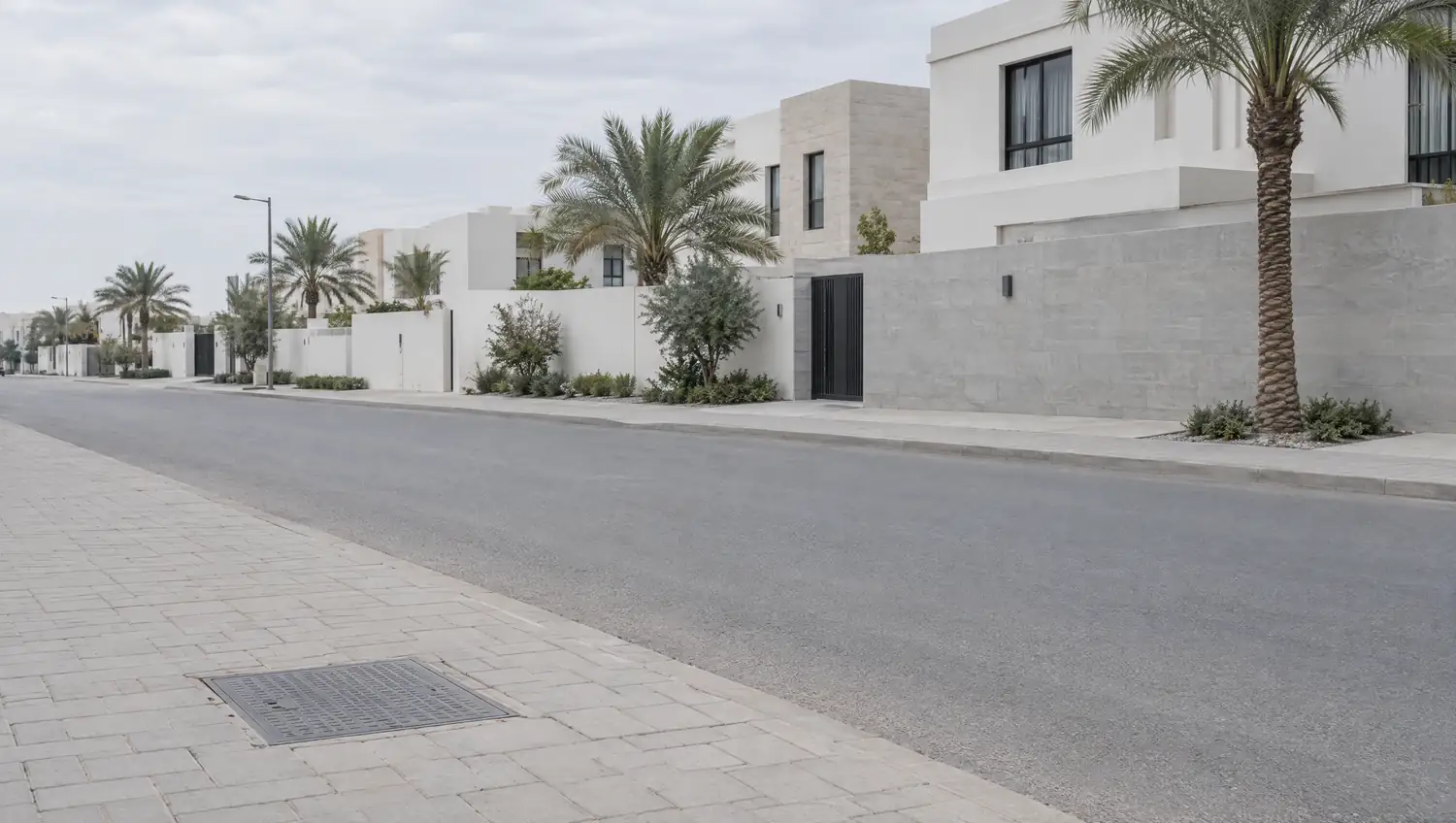
Site level survey
Ground elevation readings confirm the natural direction water will travel
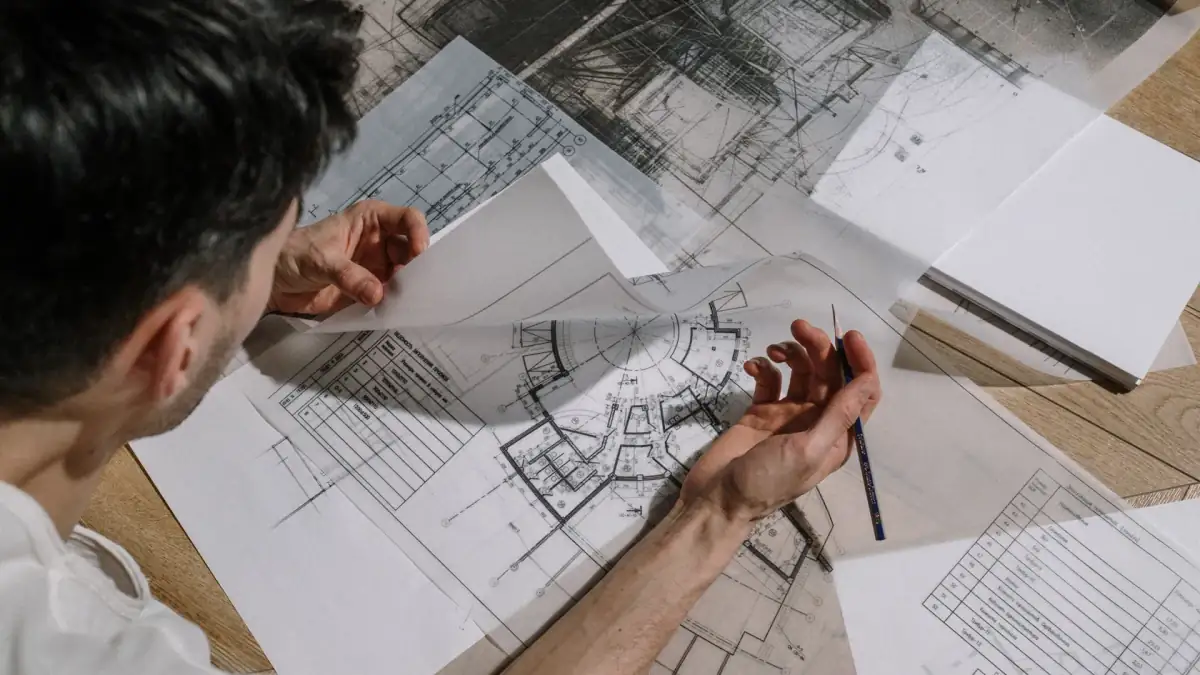
Jahra
A storm drain network in Abdali protects fields and homes from water pooling on clay soil. We read the site and draw trenches, pipes and dry wells to suit soil type. The design considers natural slope and distance from the border. Final drawings specify depths, diameters and exact locations.
Abdali's farmland has heavy clay soil that traps water instead of draining fast, and homes near Kinanah fields need protection from flooding. The drain line must cut through clay depth to reach porous sand below, or move water fast away from settled areas. We measure clay depth and distance to sand, then place the dry well far from house foundations. Large pipes and steady fall ensure clay does not build up in lines.
Abdali in Jahra governorate near the Iraqi border, where farms and homes sit side by side on heavy clay soil.
We flush pipes before handover with high-pressure water because clay may collect at start points and bends.
Ground elevation readings confirm the natural direction water will travel
Expected flow volume determines the correct pipe diameter for each run
Gullies are positioned so no low point is left without an outlet
Chambers placed at every direction change to allow future maintenance
Adequate slope prevents sand settlement and keeps flow gravity-driven
Final discharge point set away from foundations, fencing and neighbouring plots
How we work

Tell us what is happening and where, and the right equipment is loaded before we arrive.
We film the line from inside and know the kind of blockage and its exact place. No guessing.
High pressure water, a machine or a drain snake, whichever the line actually needs.

The camera runs a second pass and you see the line clear with your own eyes before we leave.
Same method, same equipment. Only the size of the job changes.
Why us
Amana means trust. Someone else's home is not ours to be careless in.
Do not take our word for it. Look at the line yourself.
Breaking is the last resort, never the first step.
A blocked line does not wait for the morning.
Six governorates, 139 areas.
For buildings and complexes, servicing before the problem starts.
Restaurants, offices and complexes, not only homes.
Common questions
Need someone now? The emergency line is open any hour.
+965 9668 4964
Yes, the dry well must penetrate clay and reach porous sand, and it may be quite deep. We measure soil first to know the real distance, then explore alternatives if sand sits too far down.
If the channel exists and levels suit it, yes. We measure channel height and trench bottom needed, then draw a separate line draining into it. This reduces the need for very deep dry wells.