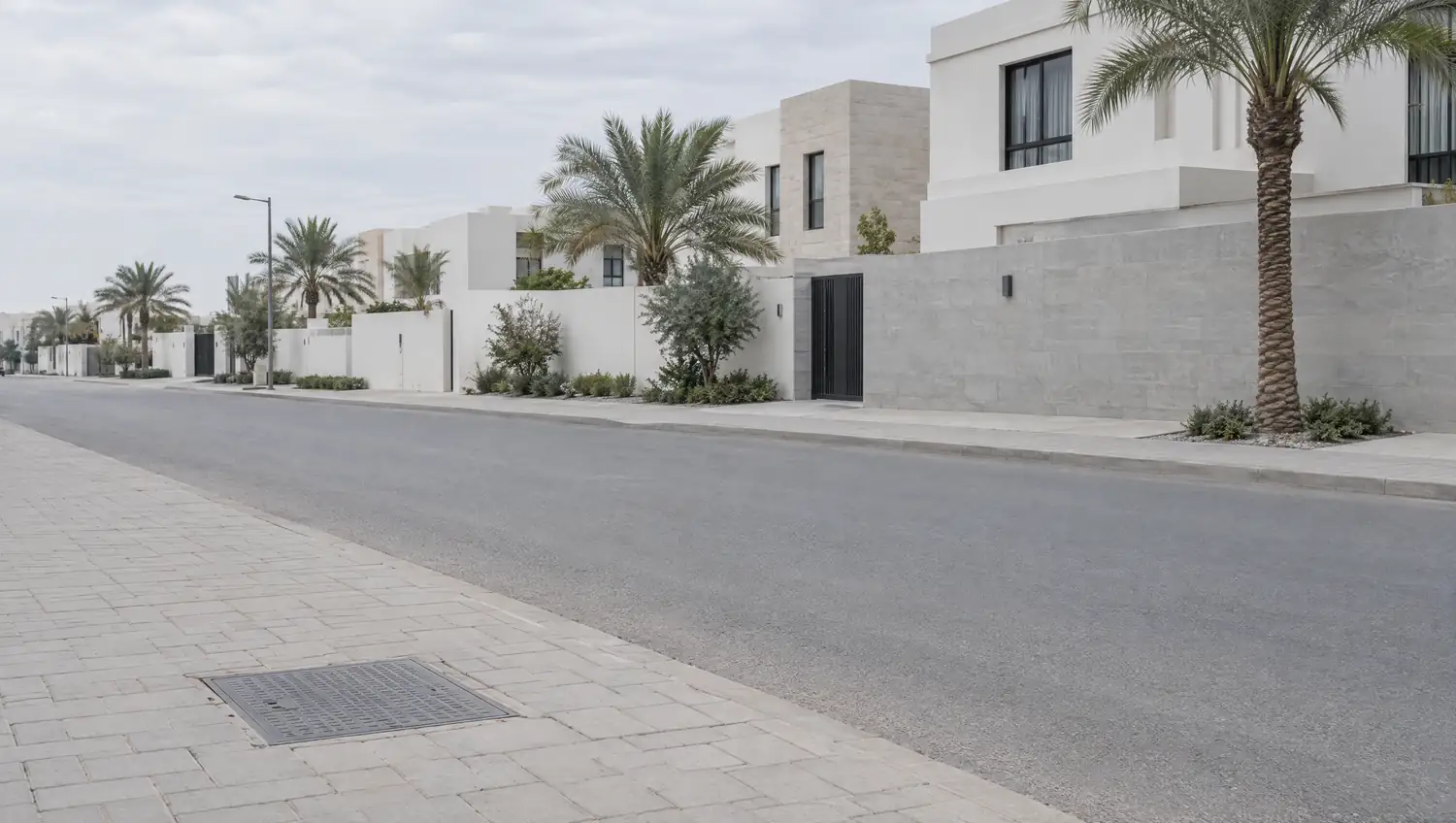
Site level survey
Ground elevation readings confirm the natural direction water will travel
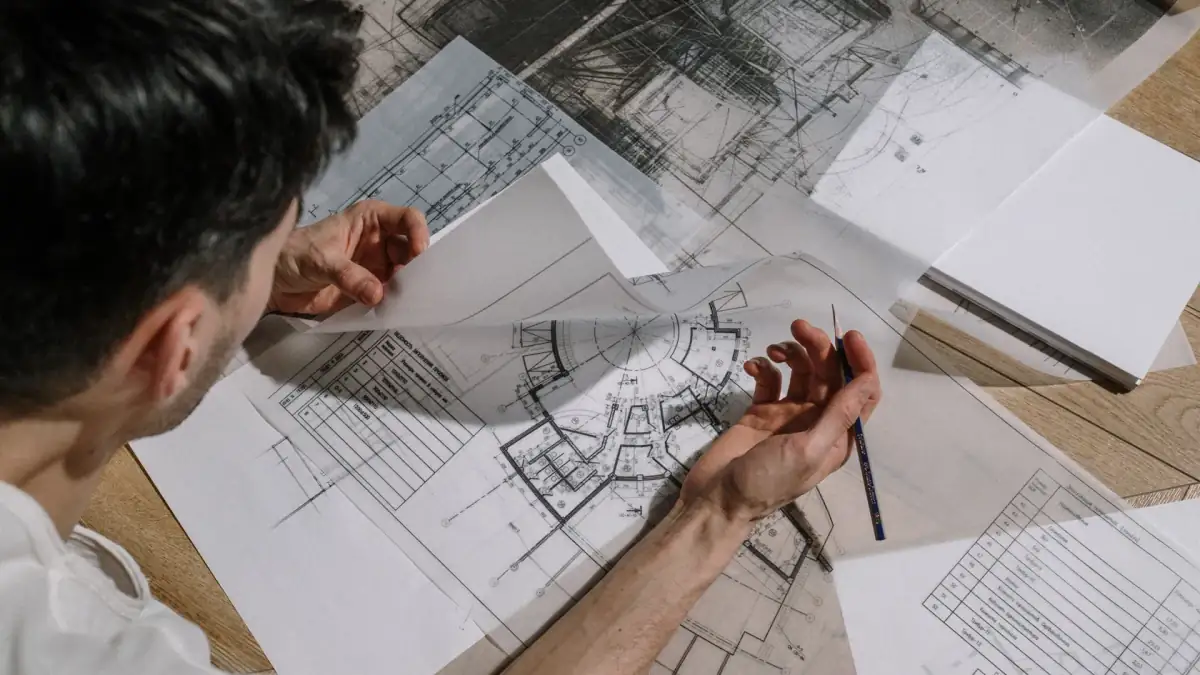
Jahra
Storm-drain design in Taima faces clay underneath surface sand and harsh slopes toward the desert. We dig a test pit before design to learn the clay depth. Long isolated routes need intermediate holding reservoirs. The final drawing pinpoints each inspection well and pipe diameter.
Houses in Taima scatter across desert suburbs far from each other, and no single public network collects all water. Each property needs a system that starts from the roof and yard and drains to a deep soak pit or open evaporation basin. Clay under sand blocks natural absorption, so we dig deeper or widen the basin. We test absorption rate by filling the pit with water and measuring how fast it drops.
Taima lies in the desert suburbs of Jahra governorate, where population density is low and soil is mixed sand and clay.
We need five days of full testing to measure soil absorption before fixing the final basin size.
Ground elevation readings confirm the natural direction water will travel
Expected flow volume determines the correct pipe diameter for each run
Gullies are positioned so no low point is left without an outlet
Chambers placed at every direction change to allow future maintenance
Adequate slope prevents sand settlement and keeps flow gravity-driven
Final discharge point set away from foundations, fencing and neighbouring plots
How we work

Tell us what is happening and where, and the right equipment is loaded before we arrive.

We film the line from inside and know the kind of blockage and its exact place. No guessing.
High pressure water, a machine or a drain snake, whichever the line actually needs.

The camera runs a second pass and you see the line clear with your own eyes before we leave.
Same method, same equipment. Only the size of the job changes.

Why us
Amana means trust. Someone else's home is not ours to be careless in.
Do not take our word for it. Look at the line yourself.
Breaking is the last resort, never the first step.
A blocked line does not wait for the morning.
Six governorates, 139 areas.
For buildings and complexes, servicing before the problem starts.
Restaurants, offices and complexes, not only homes.
Common questions
Need someone now? The emergency line is open any hour.
+965 9668 4964
No, natural soil absorbs better than perforated concrete. But clay requires stone walls without a top cover to prevent soil collapse above the pit over time.
At least five meters from the foundation to avoid weakening walls with moisture. We choose a spot away from any groundwater wells and upwind of the prevailing local wind.