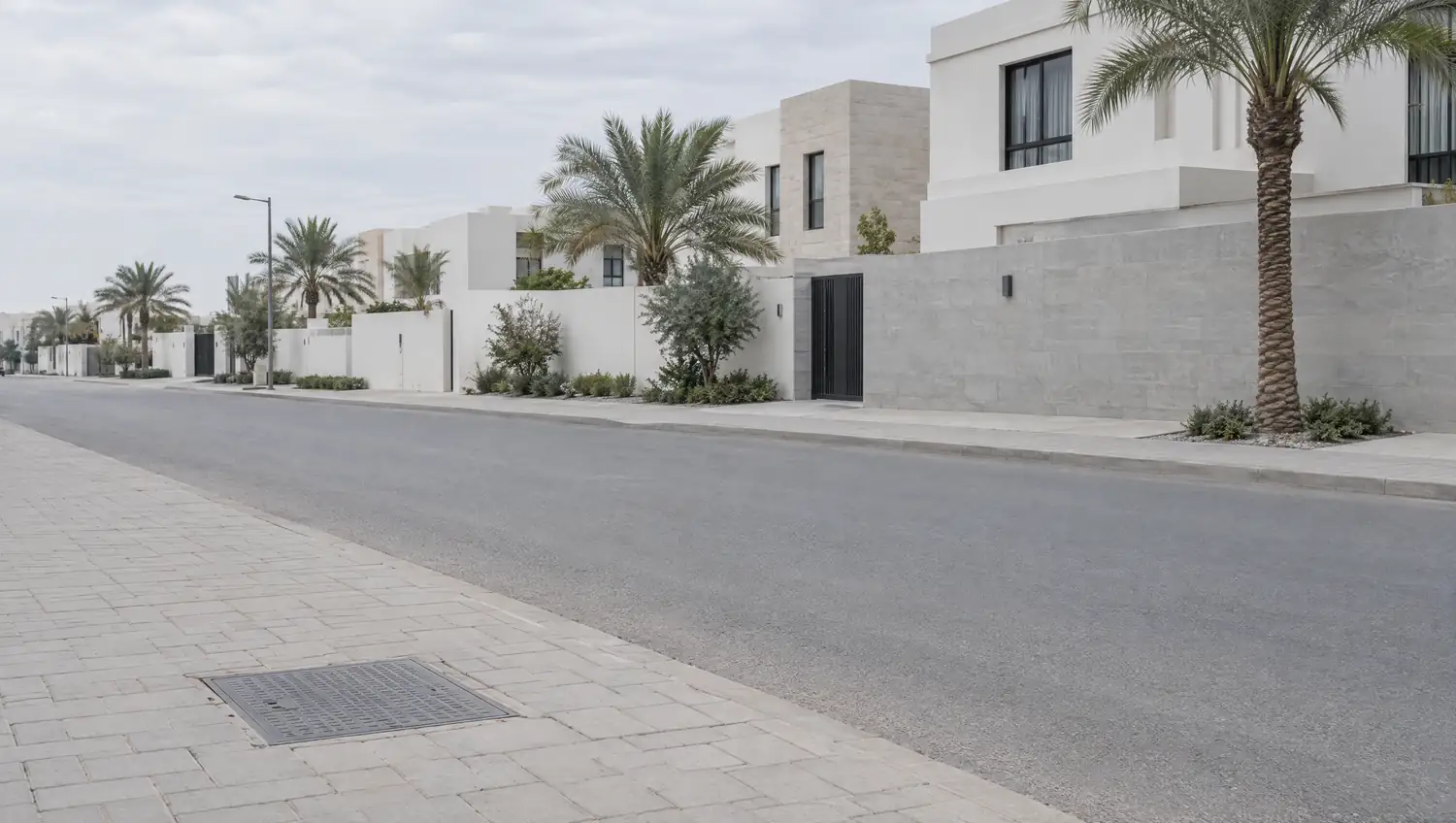
Grease pumping
Vacuum pump removes floating grease layer and liquid waste fully
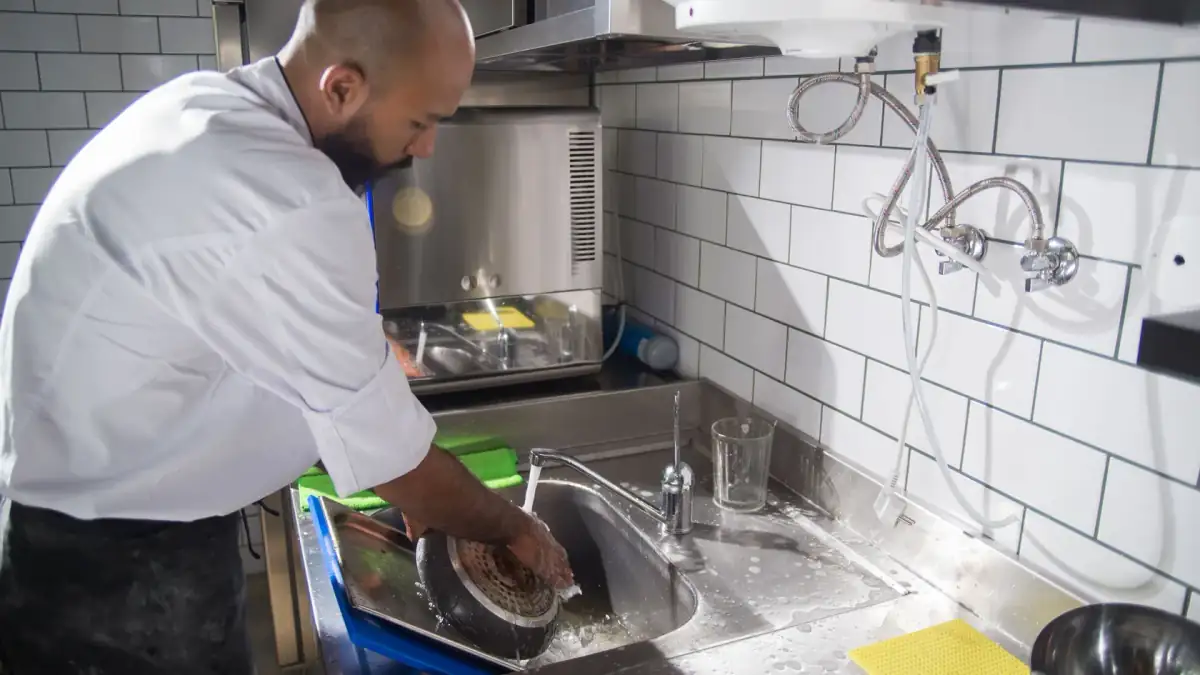
Farwaniya
Grease trap servicing at Ardhiya Industrial starts by lifting the pit cover and checking for accumulated solidified fat and oil. We vacuum out the sludge, then wash the trap walls with pressure water and solvent. We test the outlet drain under strong flow to confirm water runs clear to the main network.
Most restaurants and cafés in this industrial zone have underground grease traps positioned close to kitchen exits, with the outlet drain running beneath narrow passages and roads between buildings. When blocked, water pools in the kitchen or smells rise from drains, which means the trap is full or the line is frozen with grease. We open the pit and examine its depth and buildup before vacuuming, because some traps here are old with cracked walls.
Ardhiya Industrial sits in Farwaniya governorate, a dense zone of factories, restaurants and warehouses that all drain into a single sewerage network.
After cleaning, we run continuous flow through the line for five minutes to confirm water does not back up into the trap.
Vacuum pump removes floating grease layer and liquid waste fully
Caked sludge scraped from trap floor and walls, not left behind
Pressure jet clears residual grease from interior walls and outlet pipe
In-line camera checks the drain beyond the trap is fully clear
Internal baffles and lid seal checked; faulty parts reported to owner
Covers restaurants, central kitchens, food courts, cafes and catering units
How we work
Tell us what is happening and where, and the right equipment is loaded before we arrive.
We film the line from inside and know the kind of blockage and its exact place. No guessing.
High pressure water, a machine or a drain snake, whichever the line actually needs.
The camera runs a second pass and you see the line clear with your own eyes before we leave.
Same method, same equipment. Only the size of the job changes.
Why us
Amana means trust. Someone else's home is not ours to be careless in.
Do not take our word for it. Look at the line yourself.
Breaking is the last resort, never the first step.
A blocked line does not wait for the morning.
Six governorates, 139 areas.
For buildings and complexes, servicing before the problem starts.
Restaurants, offices and complexes, not only homes.
Common questions
Need someone now? The emergency line is open any hour.
+965 9668 4964
It depends on the trap size and kitchen volume. A small trap with daily service needs cleaning monthly or every two months. A large trap with light cooking load needs it roughly every three months.
Solidified grease and solid sludge are collected in a sealed suction tank then transported to a licensed waste facility. Washwater from cleaning returns to the trap and flows out through the drain line.