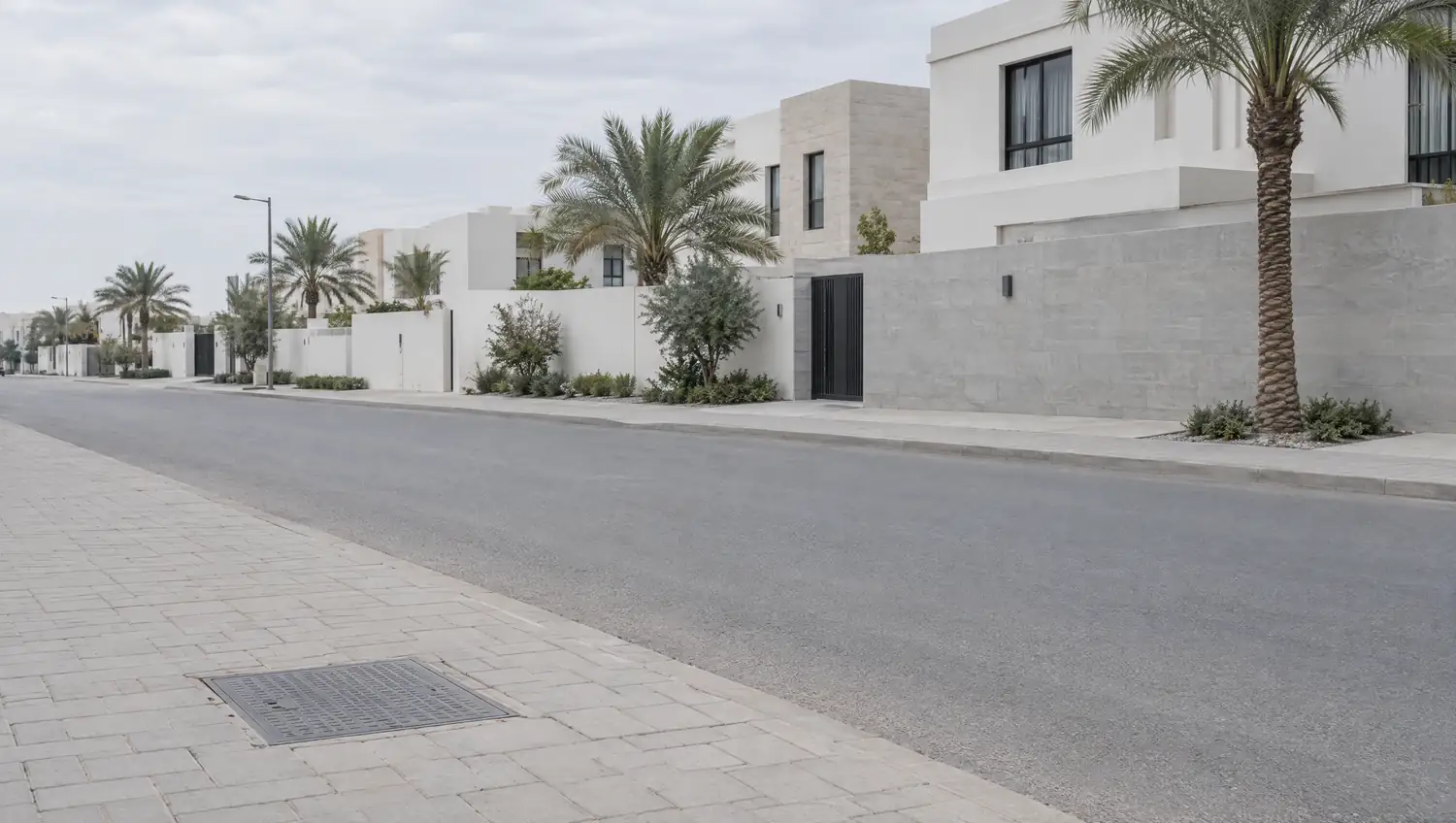
Roof tank installation
Polyethylene tank set on roof with supply, overflow and pump lines connected
Farwaniya
Water tank installation at Ardhiya Industrial starts by measuring the factory or warehouse's daily cold and hot water demand. We select the underground or overhead tank size based on available space and expected use. We run supply pipes from the public meter to the tank and then to consumption points. We install the pump, fittings and valves, test pressure and flow, then hand over.
Ardhiya Industrial warehouses are typically reinforced concrete and steel with robust floors and roofs strong enough for heavy tanks. Most warehouses have high ceilings that allow an overhead tank at sufficient height to create natural pressure on distribution lines. We measure the distance from roof to outlets and check horizontal pipe falls to prevent air traps. Where a warehouse needs hot water for cleaning, we install a second smaller tank beside the main one and connect it to an electric or steam heater.
Ardhiya Industrial lies in Farwaniya governorate and comprises rows of large warehouses and factories that rely on dependable water systems.
We fill a new storage tank completely and wait one hour to detect any slow seepage at welds before connecting the pump.
Polyethylene tank set on roof with supply, overflow and pump lines connected
Watertight underground tank built with access hatches and rising main connected
Mains supply connected to tank with float valve and isolation fitted
Overflow routed away from the building at correct fall to prevent backflow
Transfer or pressure pump connected to tank and tested under load
Full network pressure test after installation confirms every joint holds
How we work

Tell us what is happening and where, and the right equipment is loaded before we arrive.
We film the line from inside and know the kind of blockage and its exact place. No guessing.
High pressure water, a machine or a drain snake, whichever the line actually needs.
The camera runs a second pass and you see the line clear with your own eyes before we leave.
Same method, same equipment. Only the size of the job changes.
Why us
Amana means trust. Someone else's home is not ours to be careless in.
Do not take our word for it. Look at the line yourself.
Breaking is the last resort, never the first step.
A blocked line does not wait for the morning.
Six governorates, 139 areas.
For buildings and complexes, servicing before the problem starts.
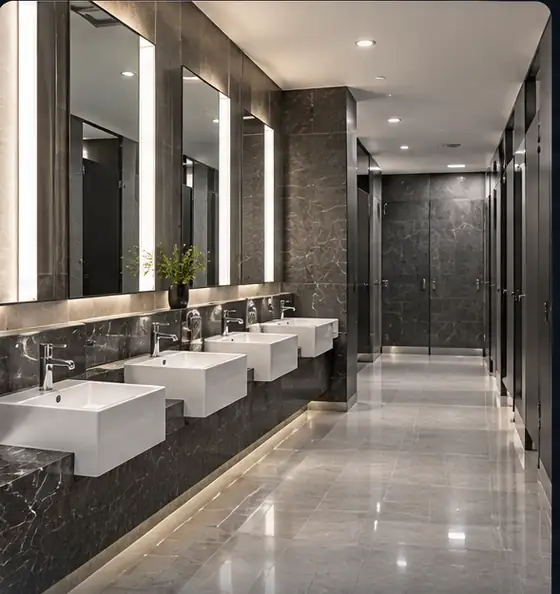
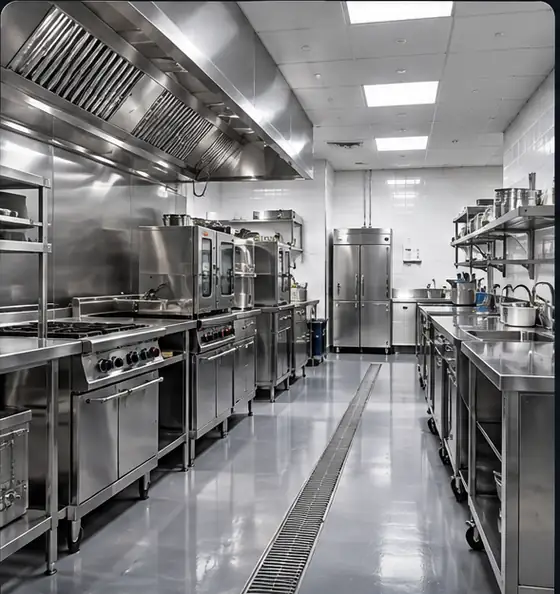
Restaurants, offices and complexes, not only homes.
Common questions
Need someone now? The emergency line is open any hour.
+965 9668 4964
Underground is better if the warehouse is near a public road and you want to protect the tank from heat and dust. Overhead is faster and cheaper if you have adequate height and roof load capacity.
We test three times: filling the tank and checking welds and seepage, running the pump and checking pressure on the gauge, and running all outlets together to confirm even flow.