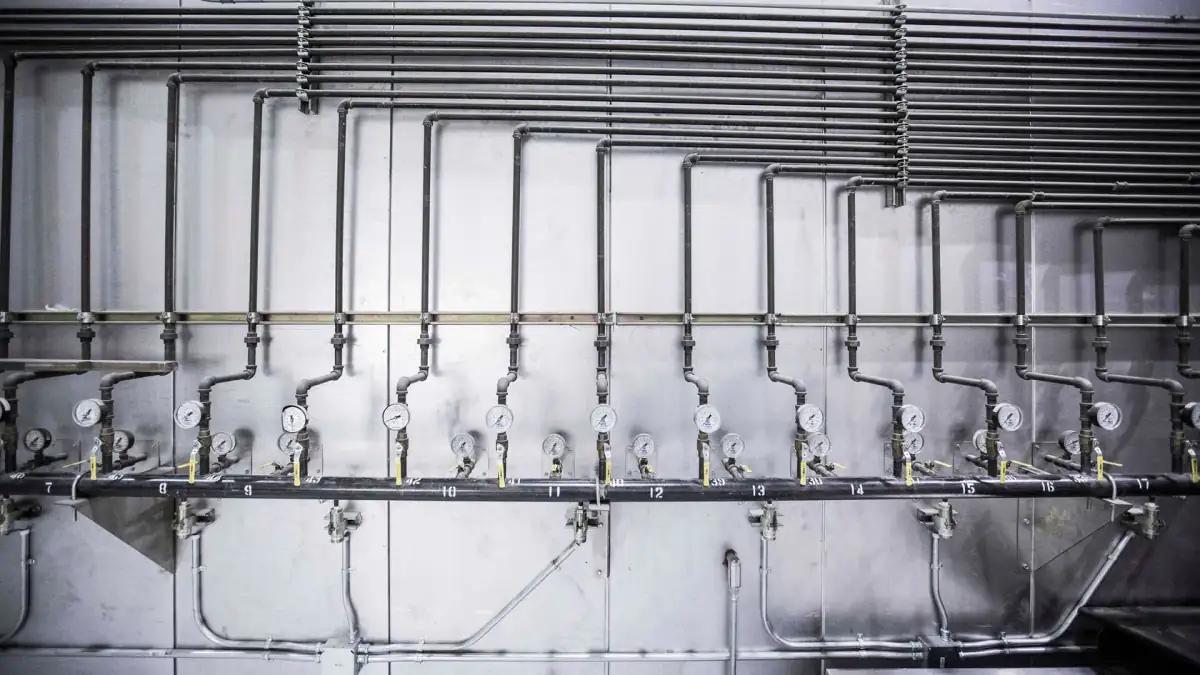
Copper or steel pipe run
Correct diameter pipe sized to kitchen appliance load and inlet pressure.
Running gas from the inlet point to each kitchen appliance outlet, safely and correctly.
Correct diameter pipe sized to kitchen appliance load and inlet pressure.
Individual outlet with isolation valve for each hob, oven or fryer.
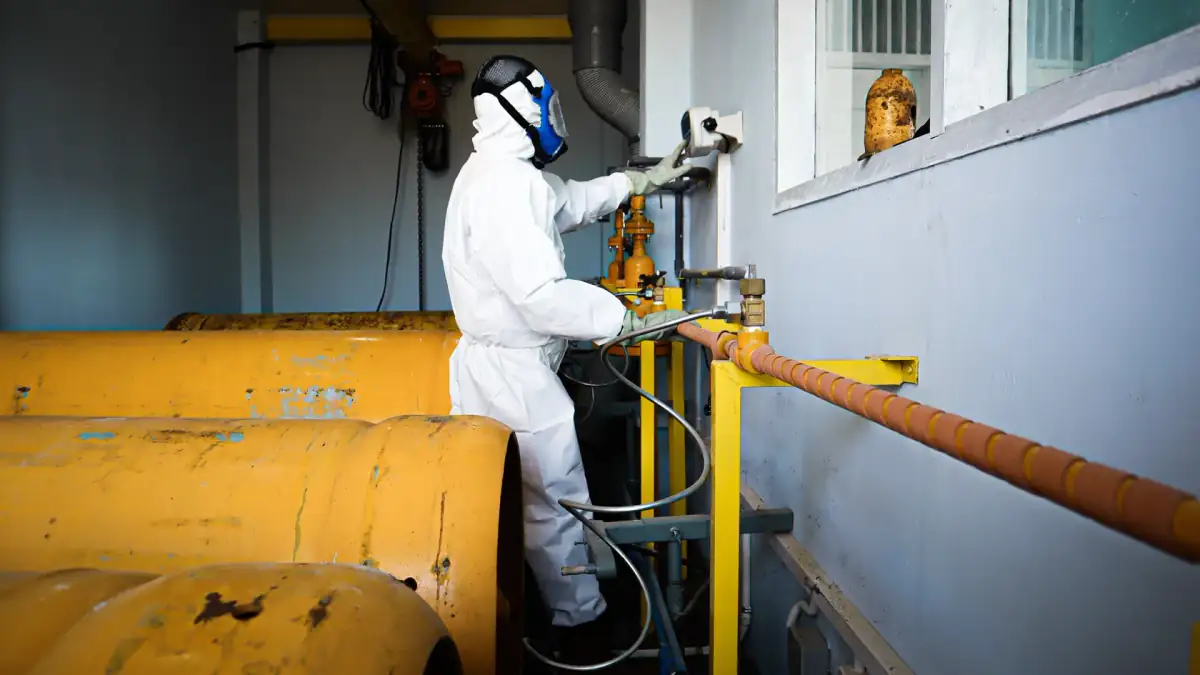
Pipe run inside protective conduit or channel with ventilation clearance observed.
Joints finished by brazing or press-fit method suited to the pipe material.
Nitrogen pumped to test pressure and held to confirm every joint is tight.
Inspection of an existing run and repair of any corroded section or weeping joint.
Tell us the appliance count and whether an existing line is in place.
We measure the route, mark inlet and appliance points, and note sleeve requirements.
Pipe run laid, valves fitted, and all joints completed before any test.
Nitrogen held at test pressure to confirm every joint holds tight.
Gas opened, appliances connected, and every burner checked before we leave.
A brief gas smell when the hob lights, then clears, points to a small joint weep rather than the burner itself.
A flame turning yellow or orange on a burner that always burned blue signals unsteady supply pressure in the run.
Connecting a new oven or gas hood without a properly run and tested outlet is a real hazard.
A fit-out contractor moved or cut the existing gas run during a kitchen remodel and the line was never retested.
Using a long flexible connector instead of a solid run risks kinking and cracking over time.
Without a valve at each appliance, the whole kitchen supply must be shut to swap a single appliance.
Opening the gas before a nitrogen hold-test leaves leaking joints hidden behind cabinets and appliances.
Burying pipe directly in plaster without a sleeve makes any future leak expensive to locate and fix.
Part of Central gas lines · All services · Back to the home page
No fixed rate applies; these factors together determine what the work costs.
Distance from inlet to appliances and number of bends or obstacles encountered.
Each outlet needs its own joint and isolation valve, adding to total material and labour.
A concealed run through finished walls or floors requires cutting and making good.
Copper costs more than steel but is easier to route in a finished kitchen space.
Evening calls and weekend visits carry a higher call-out rate than standard hours.
Same method, same equipment. Only the size of the job changes.
Why us
Amana means trust. Someone else’s home is not ours to be careless in.
Do not take our word for it. Look at the work yourself.
The leak is marked before a single tile comes up.
A leak does not wait for the morning.
Six governorates, 139 areas.
For buildings and complexes, servicing before the problem starts.
Restaurants, offices and complexes, not only homes.
Six governorates, 139 areas.
Common questions
Need someone now? The emergency line is open any hour.
+965 9668 4964
Usually yes, if the existing pipe diameter can carry the added load. We check the current supply pressure first and confirm whether a branch is practical or whether the run needs upsizing.
Copper is the common choice in home kitchens because it bends cleanly and routes well behind cabinetry. Steel is more robust but harder to form in tight kitchen spaces.
Not usually. If the building has individual isolation at each flat meter or riser, only the flat's internal line is isolated. Neighbours keep their supply throughout the work.
A flexible connector is acceptable for the short final connection at the appliance itself, not as a substitute for a solid run. With time it can kink or crack, and any leak behind a kitchen cabinet goes unnoticed.
Yes. We run a pressure test on the existing line and inspect all joints and valves. This gives you a clear picture of what the kitchen gas run needs before you complete the purchase.